

Features
Tiger Sharks at Fuvahmulah Follow Nature's Clock, Study Finds
A peer-reviewed study published in Marine Biology in May 2026 has confirmed that tiger shark sightings at Fuvahmulah's Tiger Harbour dive site follow predictable seasonal and environmental patterns. Researchers from institutions in the Maldives, Germany, and Qatar conducted 877 dives over nearly three years, tracking 220 individual sharks using photo-identification.
02 June 2026, 15:28
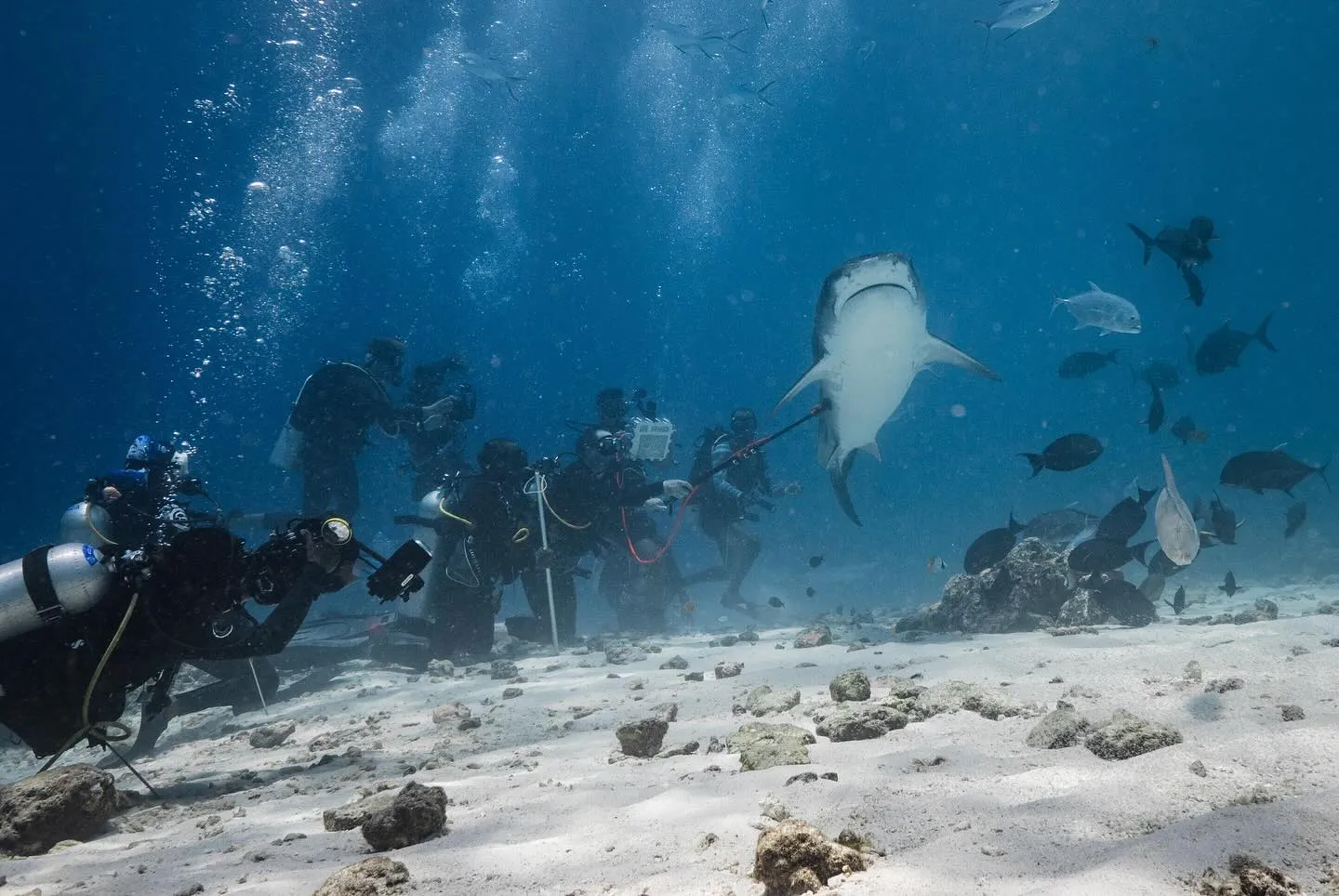
A new peer-reviewed study has found that tiger sharks at Fuvahmulah follow predictable seasonal and environmental patterns, even at a dive site where they are fed daily year-round. The findings offer dive operators and tourism planners a data-backed framework for managing shark encounters and marketing dive seasons more accurately.
The study, published in the journal Marine Biology in May 2026, was conducted by a team of nine researchers from institutions including the Fuvahmulah Dive School, Pelagic Divers Fuvahmulah, the Leibniz Centre for Tropical Marine Research in Germany, the Ministry of Climate Change, Environment and Energy, and Qatar University. Researchers have conducted it as one of the most detailed scientific examinations of tiger shark behavior ever in the Maldives.
Researchers carried out 911 underwater surveys at a shallow dive site called Tiger Harbour on the southern coast of Fuvahmulah between August 2021 and March 2024, totaling 877 dives. They used photo-identification to track 220 individual sharks and applied statistical models to assess how ocean temperature, monsoon phases, tidal cycles, lunar phases, wind direction, and weather influenced how many sharks appeared on any given dive.
Northeast Monsoon Brings the Sharks
The study's clearest finding for dive tourism is seasonal. Shark sightings were significantly higher during the Northeast monsoon, which runs from December to April, and dropped during the Southwest monsoon from June to October.
Researchers found that calmer seas, clearer water, and different current patterns during the Northeast monsoon created conditions that encouraged sharks to aggregate near the island in greater numbers. The Southwest monsoon, by contrast, brought rougher conditions, higher rainfall, and reduced food availability linked to the low tourist season. A portion of the shark population, particularly males and possibly pregnant females nearing birth, appeared to leave or reduce their use of the site during this period.
This pattern aligns closely with what dive operators at Fuvahmulah already observe informally. The study now gives that seasonal observation a scientific foundation.

Warmer Water, More Sharks
Sea surface temperature emerged as the single strongest environmental predictor of shark sightings across all groups examined. Sightings increased across adults, juveniles, highly resident sharks, and less frequent visitors as water temperatures rose.
The researchers linked this to behavioral thermoregulation, the tendency of sharks to seek out warmer water to support metabolic processes including digestion and gestation. The study noted that the group of sharks with the strongest attachment to the site was composed entirely of females, 73 percent of them adults, many of whom were confirmed pregnant in a separate study that used underwater ultrasound at the same location.
The researchers suggested that Fuvahmulah may function as a gestation ground for tiger sharks in the central Indian Ocean, with pregnant females using warm, food-available coastal waters to support embryonic development across gestation periods that can last 12 to 16 months.
For the dive tourism industry, this connection between water temperature and shark presence has a direct commercial application. Tiger Harbour dive operators can use publicly available sea surface temperature data alongside seasonal calendars to refine peak and shoulder season marketing.
Who Shows Up and When
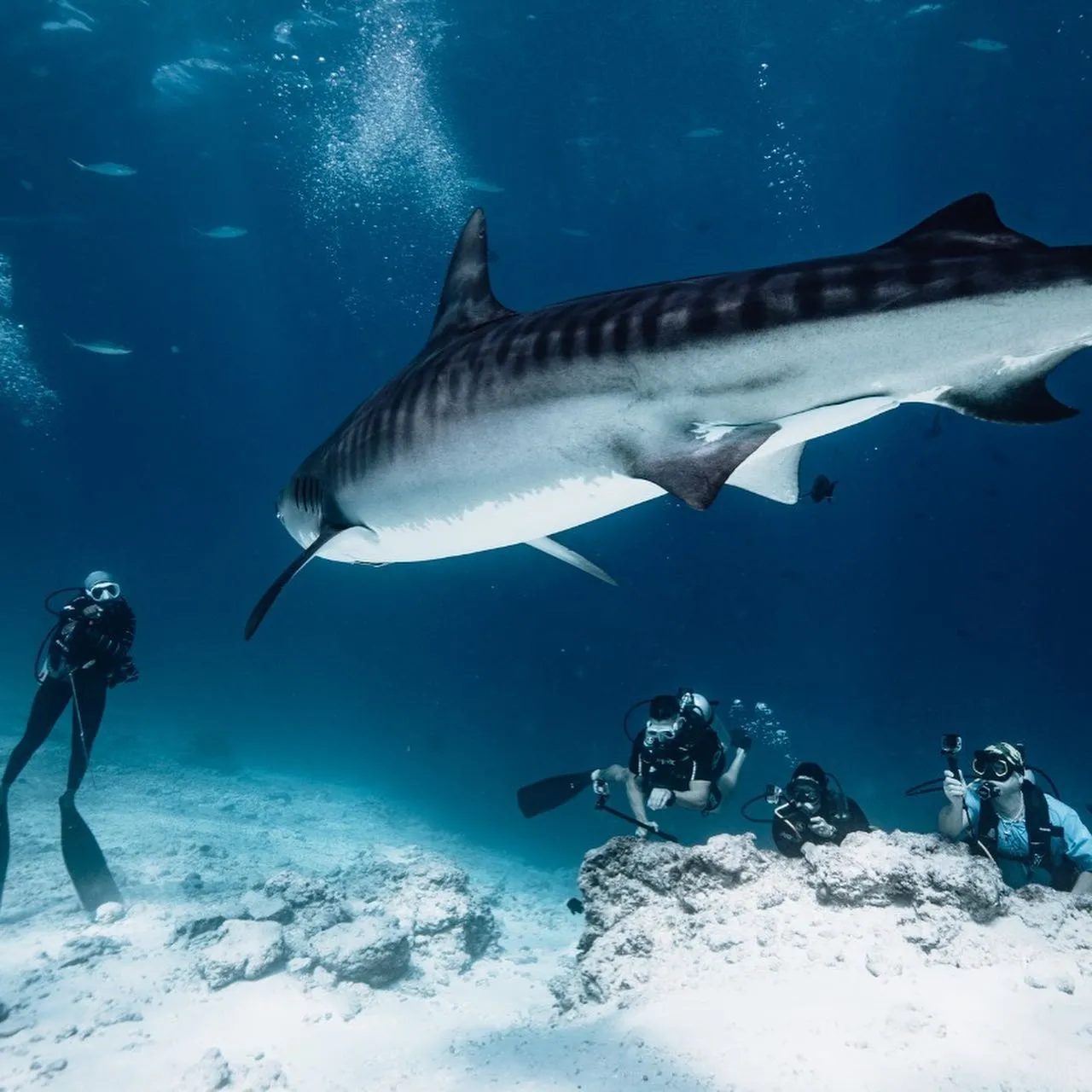
The study separated sharks into two behavioral groups. Thirty individuals were classified as highly resident, returning frequently throughout the study period. The remaining 190 were classified as less resident, with some appearing only once.
Highly resident sharks, all females, responded most strongly to water temperature and Northeast monsoon conditions. Less resident sharks, a more mixed group including both juveniles and adults, responded more to weather patterns, wind direction, and lunar and tidal cycles.
This distinction matters for tourism planning. The core population of resident females provides a reliable baseline for dive operators throughout the cooler, calmer months. Less predictable visitors add variability to encounter numbers from day to day.
The study also detected a modest influence of tidal and lunar cycles, with slightly higher sightings recorded during rising and high tides under certain moon phases. Researchers noted this effect was weak at Fuvahmulah due to the island's small tidal range of around one metre and its shallow fringing reef geography and said dive scheduling need not revolve around tide tables.
A Globally Significant Shark Site
Fuvahmulah is already recognized internationally as home to what researchers have described in previous studies as the world's largest tiger shark aggregation. The island sits approximately 30 kilometres south of the equator and lacks a lagoon, a geographical feature that distinguishes it from most Maldivian atolls and contributes to the unique nearshore conditions that attract pelagic species.
Tiger sharks are listed as a near-threatened species globally, with overfishing identified as the primary driver of declining populations worldwide. The Maldives has operated as a Shark Sanctuary since 2010, prohibiting the killing or export of sharks and their products. Fuvahmulah falls under this protection.
The research was conducted under permits issued by the Maldives Environmental Protection Agency and the Ministry of Fisheries, Marine Resources, and Agriculture. The authors declared no conflicts of interest and received no external funding for the manuscript.
In a video posted on his Facebook page, Ahmed Inah, one of the paper's co-authors, outlines the primary findings.
Implications for Operators and Policy
The study's authors noted that provisioning sites, where sharks are attracted using food, offer a useful framework for scientific monitoring of marine species at a small spatial scale. Despite year-round feeding at Tiger Harbour, the sharks continued to follow natural environmental rhythms rather than becoming entirely dependent on the food source for their movements.
This finding supports the case that managed shark tourism at Fuvahmulah does not fundamentally alter tiger shark ecology. It also suggests that the site's value extends beyond tourism revenue, functioning as critical reproductive habitat for a threatened apex predator.
The researchers called for future tracking studies to confirm the movements of pregnant females during the Southwest monsoon months. They also noted that the models used in the study explained between 24 and 38 percent of the variation in daily shark sightings, indicating that additional factors not yet measured also influence encounter rates.
For dive businesses on the island, the study provides a credible scientific basis for communicating encounter expectations to international guests and travel partners, a tool that is becoming more important as divers become more sophisticated in evaluating destinations before booking.
All the pictures featured in this article are sourced from Pelagic Divers Fuvahmulah Facebook page.
Leave a comment
Comments
No comments yet. Be the first to comment!
Latest News
News
BML financing to fishermen reaches MVR 15mn across 119 recipients
21 Oct 2026
News
Pakistan offers G2G supply of essential food and pharmaceuticals to Maldives
21 Oct 2026
MACL
VIA to move check-in for 10 international airlines to Terminal 2 from 25 October
21 Oct 2026
News
Maldives, Pakistan target $200 million in annual trade within two years
21 Oct 2026