

News
Parliament backs income tax changes projected to raise MVR 496 million in revenue
Proposed amendments would reduce the deductible interest expense limit from 30% to 25% of tax EBITDA, with implementation planned for January 2027.
17 November 2026, 06:44
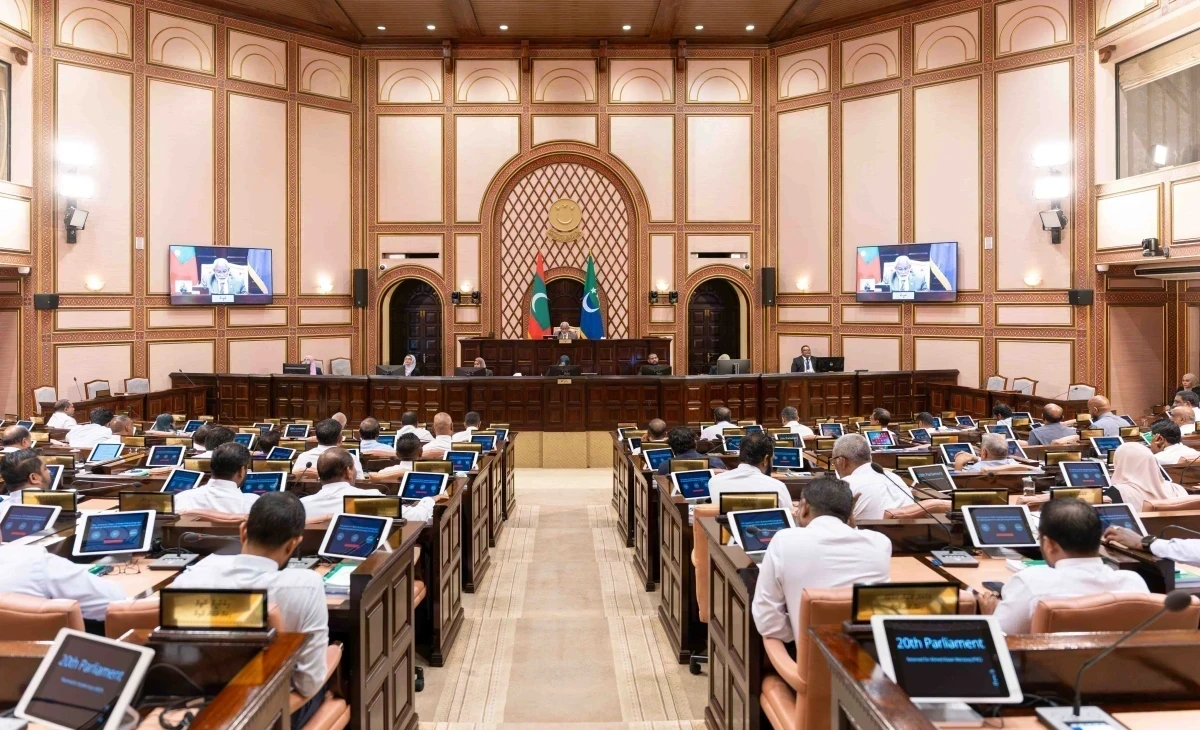
Parliament's Committee of the Whole House has approved proposed amendments to the Income Tax Act that would tighten limits on deductible interest expenses, with the changes expected to generate an additional MVR 496.3 million in government revenue.
The amendment bill, submitted on behalf of the government by Vilufushi MP Hassan Waheed, received 66 votes in favour during the committee stage on Monday, 16 November.
Under the proposed changes, the maximum interest expense that taxpayers can deduct when calculating taxable income would be reduced from 30% to 25% of their tax EBITDA for the relevant tax period.
Tax EBITDA is a tax-adjusted measure of earnings before interest, taxes, depreciation and amortisation, used to determine how much interest expense can be deducted for income tax purposes.
The proposed reduction would restrict the amount of interest expenses that eligible taxpayers can deduct, potentially increasing taxable income for businesses with substantial borrowing costs.
The bill also seeks to repeal certain provisions of the existing Income Tax Act relating to the calculation of deductible interest expenses.
According to financial estimates accompanying the legislation, the proposed amendments are expected to generate an additional MVR 496.3 million in state revenue.
The changes are intended to take effect on 1 January 2027, subject to the completion of the legislative process.
The Committee of the Whole House also approved a separate amendment to the Goods and Services Tax Act, proposing changes to GST registration requirements, taxation of overseas tourism service providers and measures to address tax avoidance.
Both bills must complete the remaining parliamentary procedures before they can be ratified and become law.
Leave a comment
Comments
No comments yet. Be the first to comment!
Latest News
News
MTCC launches leadership certification programme to strengthen management capabilities
17 Nov 2026
News
Maldives signs agreement with UAE firm to advance Ihavandhippolhu Economic Gateway
17 Nov 2026
STO
STO launches Ramazan Bazaar with up to 50% discounts and MVR 100,000 grand prize
17 Nov 2026
News
Maldivian Plans Direct Flights to Pakistan
16 Nov 2026