

Advertorial
From the Harbour to the Household: Why Green Finance Is Personal
Green finance is not just an environmental agenda; it is about protecting Maldivian livelihoods, strengthening economic resilience and securing the financial future of households and businesses. This advertorial explores how climate risks affect fisheries, island communities and household expenses, and how sustainable investments can help build a more resilient Maldives.
30 October 2026, 10:38
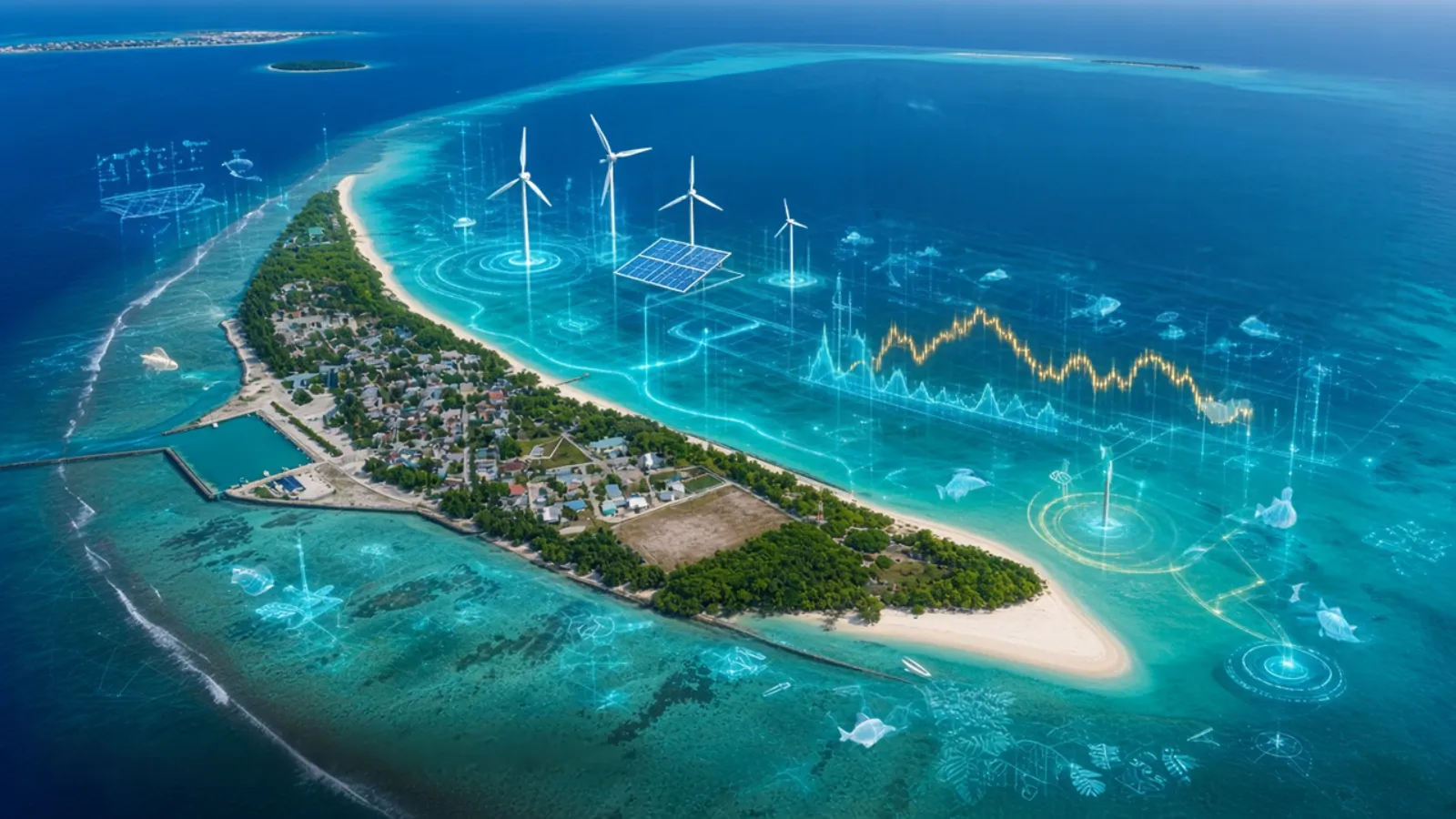
For a country whose economy is so closely tied to its natural environment, the effects of climate change are rarely confined to the environment itself. They reach into the livelihoods of fishermen, the operations of local businesses and the everyday expenses of households across the islands.
Consider the fisheries sector.
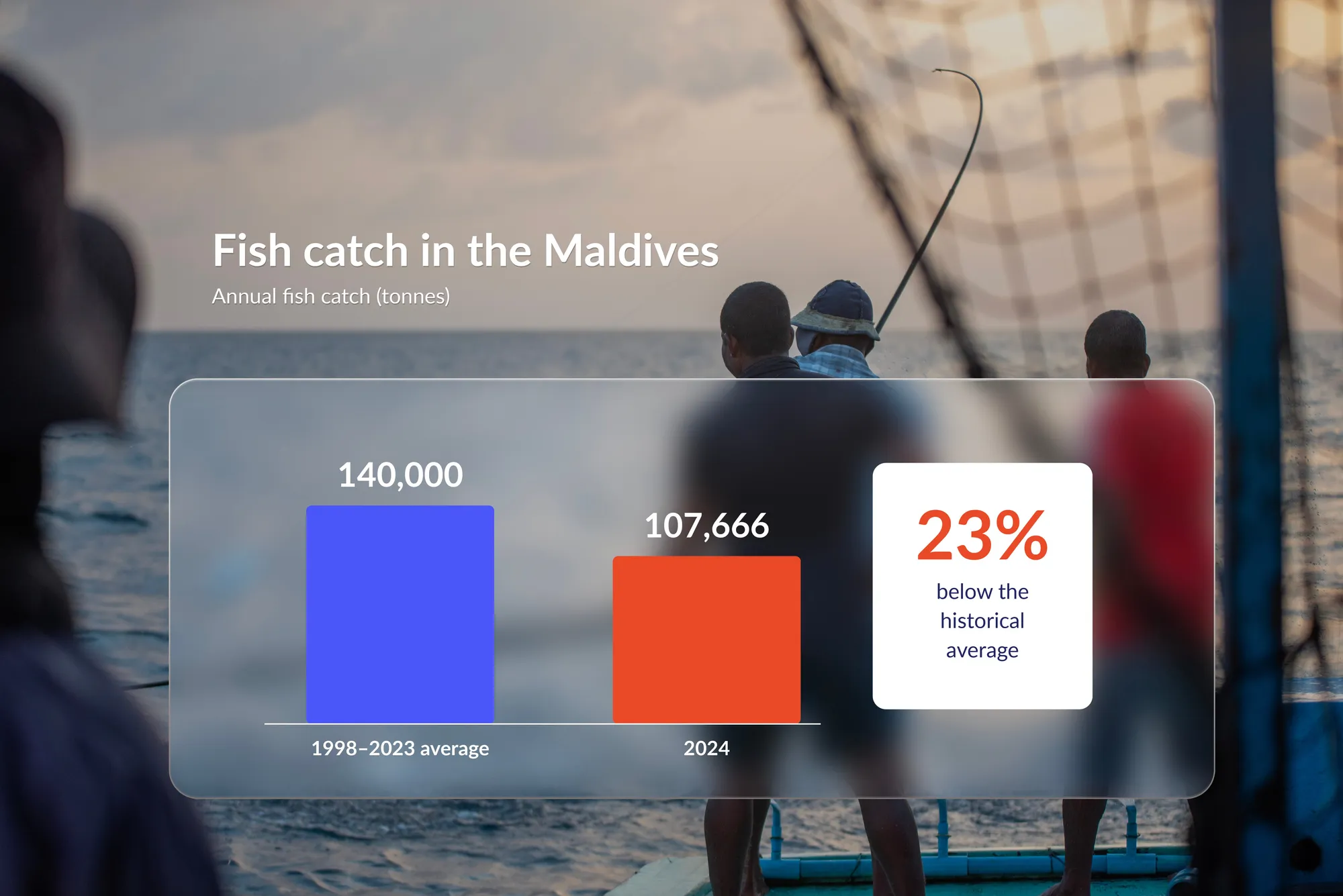
In July 2024, Maldivian fishermen recorded their lowest monthly catch since records began in 1985. By the end of the year, the national catch had fallen to 107,666 tons, compared to an annual average of approximately 140,000 tons between 1998 and 2023. Although catches recovered in 2025, the sector faced renewed challenges in 2026, with fish exports in the first half of the year reaching their lowest level since 2010, according to the annual report of Maldives industrial Fisheries Company MIFCO.
Behind these figures are fishing communities adjusting to increasingly difficult circumstances.
In Laamu Atoll, fishermen have reported travelling farther to find baitfish. Some vessels from the southern atolls have moved towards central waters in search of tuna. Others have stopped fishing or converted their boats for cargo transportation, as reported by Maldives Independent.
Scientists have yet to establish a definitive cause for these changes. One possibility being studied is whether warmer surface waters are pushing tuna and their prey into deeper waters, making them harder to reach through traditional pole-and-line fishing.
Whatever the cause, the consequences extend well beyond the fishing boats. For families whose incomes depend on the day's catch, longer journeys and lower catches can mean higher expenses, reduced earnings and greater uncertainty about the months ahead.
And for an economy where fish products accounted for 93 percent of domestic exports in 2025, these challenges carry implications far beyond individual households.
When the water comes in
For island communities, environmental challenges are not always gradual. Sometimes, they arrive overnight.
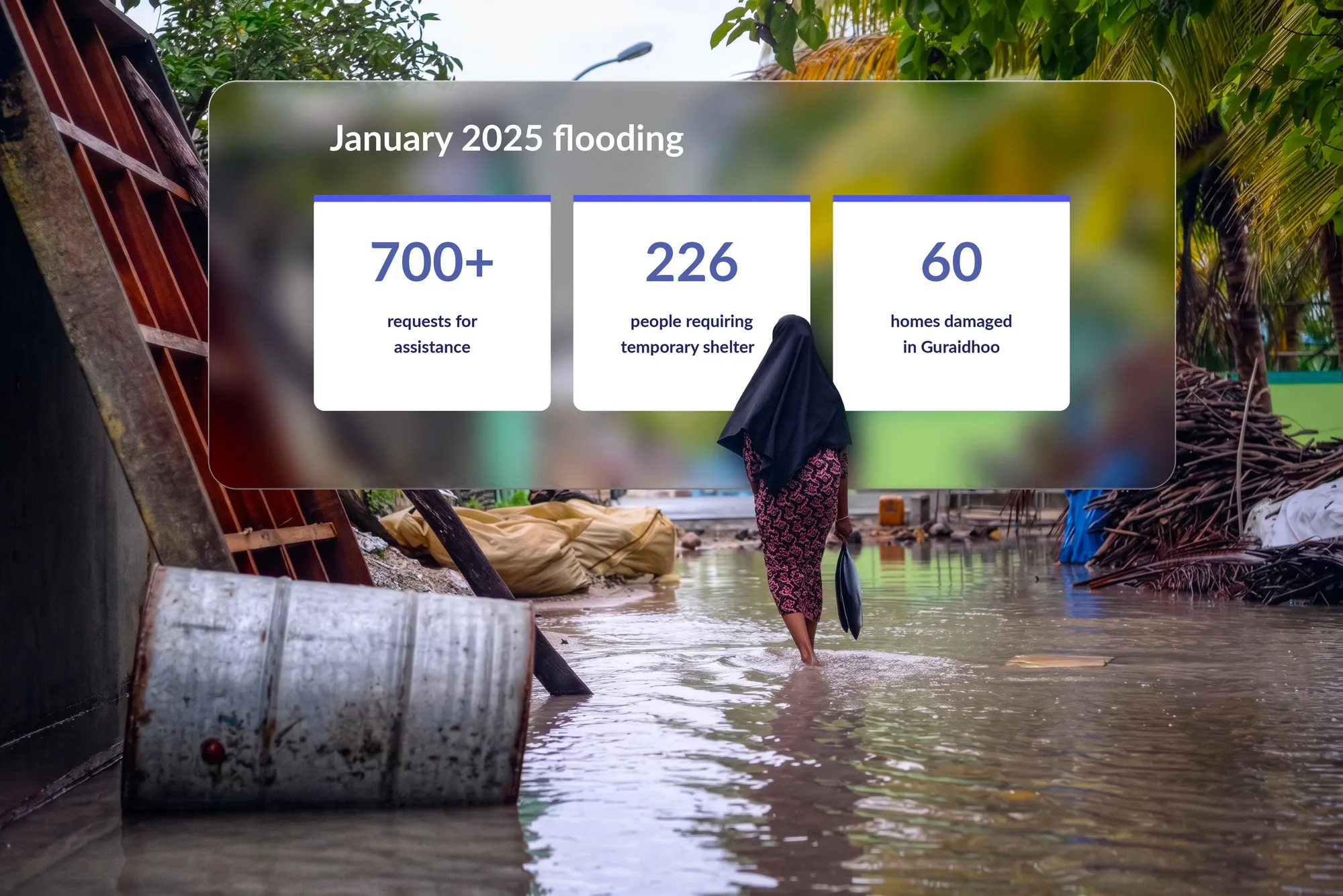
In January 2025, a single day of heavy rainfall caused widespread flooding across Malé and several other islands. Approximately 80 percent of Nilandhoo in Faafu Atoll and 60 percent of Himmafushi in Kaafu Atoll were flooded, while 60 homes were damaged in Guraidhoo. A total of 36 households, comprising 226 people, required temporary shelter, and authorities received over 700 requests for assistance, according to the National Disaster Management Authority (NDMA).
In July 2026, strong swells overtopped Malé's seawall, carrying rocks and sand onto Boduthakurufaanu Magu and flooding cafés along the waterfront, as reported by The Edition.
Yet while some islands struggle with too much water, others face the challenge of having too little.
During the dry season, drinking-water shortages remain a concern across many outer islands. Rising sea levels and changing rainfall patterns place further pressure on freshwater resources, as highlighted by the Green Climate Fund. In H.Dh Nolhivaranfaru, excessive groundwater extraction has allowed seawater to enter the aquifer used by local farmers, according to the UN Climate Technology Centre and Network.
For a country that imports more than 90 percent of its food,, protecting local agriculture and ensuring reliable access to freshwater are important for long-term food security and economic resilience.
The bill at home
Not every environmental challenge is as visible as a flooded street. Some are felt through the everyday cost of living.
Electricity generation across most inhabited islands continues to rely heavily on imported diesel, as highlighted by the Ministry of Tourism and Environment during a press briefing in March 2026, reported by The Edition.
According to data published by the Maldives Monetary Authority (MMA), the Maldives imported USD 710 million worth of petroleum products in 2025, equivalent to approximately 9 percent of the country's GDP. In the first eight months of 2026, petroleum imports reached USD 809 million, an increase of 78 percent compared to the same period in the previous year.
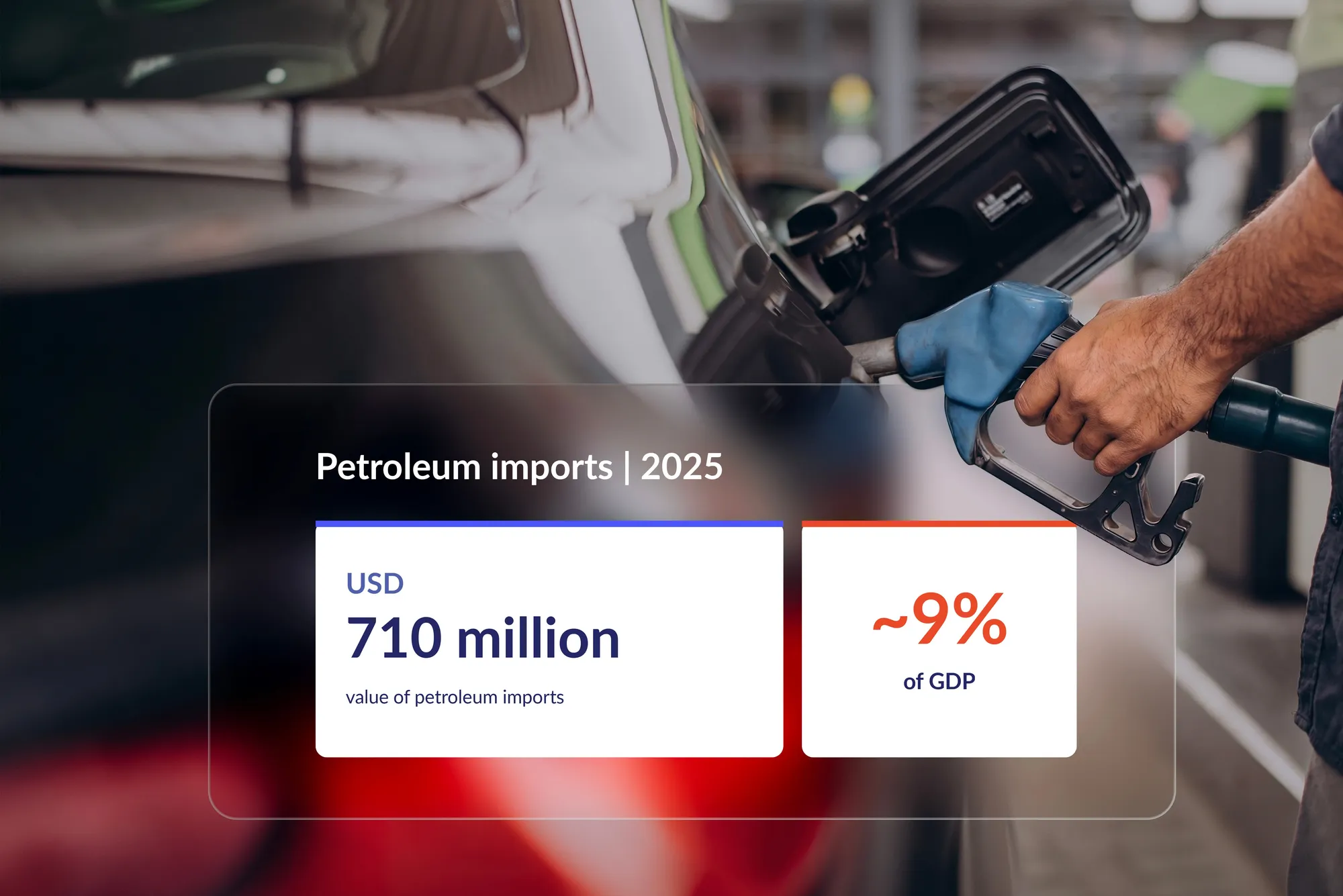
This dependence leaves the country exposed to changes in global oil prices, with rising costs affecting electricity generation, transportation, businesses and household expenses.
Reducing dependence on imported fuel is therefore not only an environmental priority, but also an opportunity to strengthen energy security and economic resilience.
Every one of these is a financial event.
A fishing boat returning with a smaller catch. A shop reopening after a flood. A household adjusting its expenses to meet a higher electricity bill.
Each of these situations has financial consequences.
A poor fishing season can make it harder for families to meet loan repayments. Flooding can damage businesses, disrupt operations and create unexpected expenses. A household experiencing a loss of income may also find it difficult to maintain regular savings, including contributions towards retirement.
For the Pension Office, these risks are relevant to both members' employment and pension contributions, as well as the broader investment environment in which their retirement savings are managed.
For businesses that depend on the natural environment, these risks can be even greater.
In 2024 and 2025 alone, 216 new guesthouses were registered across the Maldives, adding 4,062 beds to the country's tourism capacity, according to figures reported by PSM News. Many depend on the beaches, coral reefs and marine ecosystems that attract visitors. According to UNDP and AXA Climate, coral reefs support economic activities in tourism and fisheries that account for at least 20 percent of the country's GDP.
The financial sector is closely tied to these industries. Tourism has been the largest destination for bank lending every year since at least 2020. By August 2026, bank lending to the sector had reached MVR 13.8 billion, accounting for almost a third of all private-sector lending. Fishing, by contrast, received less than 1 percent, according to Maldives Monetary Authority statistics.
When environmental risks affect businesses and livelihoods, the consequences can extend to borrowers, financial institutions and investors. What begins as an environmental challenge can become a wider financial concern.
What green finance looks like on the ground
Green finance can sound like a concept reserved for financial institutions and international conferences. But its applications can be found much closer to home.
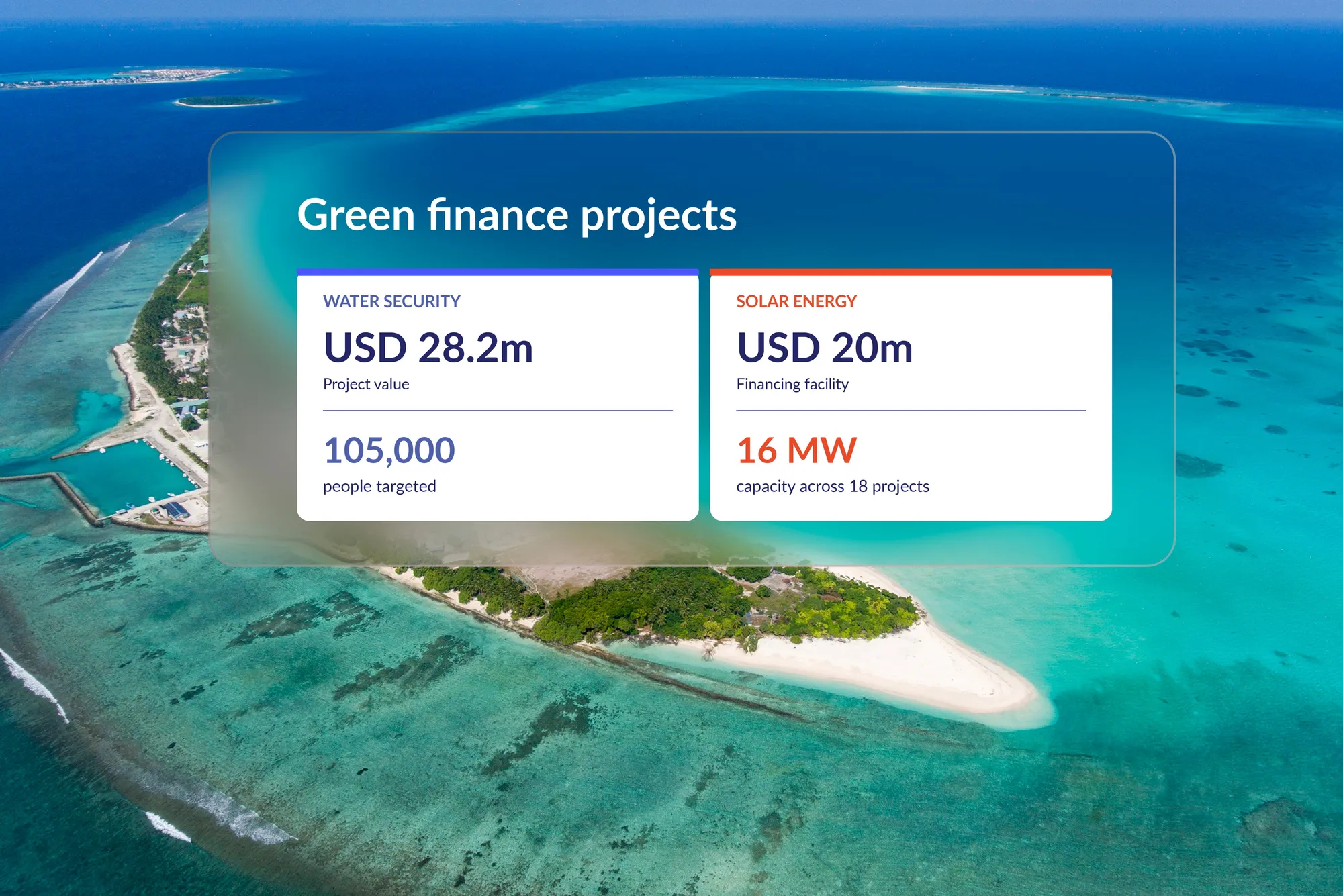
It can be a reliable water supply for an island facing shortages during the dry season. A USD 28.2 million project supported by the Green Climate Fund and UNDP was designed to improve access to secure water supplies for approximately 105,000 people on some of the Maldives' most vulnerable outer islands.
It can be a solar panel installed on a household rooftop. Through the Magey Solar Programme, Fenaka has begun installing 3 kW and 5 kW household solar systems, with capacities determined according to previous electricity consumption, as reported by The Standard. At a larger scale, Swiss investment firm responsAbility has provided a USD 20 million financing facility to support 16 MW of rooftop and floating solar capacity across 18 projects in the Maldives.
It could also be insurance for a coral reef. In 2025, the Maldives Monetary Authority, UNDP, and AXA Climate examined a parametric coral reef insurance model that would provide automatic payouts when sea temperatures remain above specified thresholds, helping make financing available for restoration efforts. The findings were presented in a feasibility study published by UNDP.
These initiatives demonstrate how financing can support practical solutions to environmental challenges. However, bringing such projects to life requires long-term capital, appropriate financial instruments, and sound investment frameworks.
For investors, projects must also be financially viable, supported by transparent reporting, sound governance, and appropriate risk management. Developing these foundations will be important in attracting investment and building a stronger green finance market in the Maldives.
A conversation that starts with people
The Maldives Finance Forum 2026, organized by the Maldives Pension Office in collaboration with UNDP Maldives, takes up these questions under the theme "Green Finance: Sustainable Investment and Financial Security in the Maldives." The 13th edition of the Forum will take place on 14 November 2026.
Its first panel begins where this article does, examining how climate-related risks affect Maldivian livelihoods, from individual households to the wider economy. Subsequent discussions will explore the financial instruments, regulatory frameworks, and investment opportunities needed to develop green finance in the Maldives. By bringing together institutions with different mandates and areas of expertise, the Forum aims to encourage a broader discussion on the financial and economic implications of climate risk and the collective efforts needed to address them.
For the Pension Office, the connection is direct. Members of the Maldives Retirement Pension Scheme work across different sectors of the economy, and their long-term financial security is closely linked to the country's economic stability. As the country's largest institutional investor, the Pension Office also has an interest in exploring opportunities to diversify the Pension Fund and support suitable long-term investments, including potential opportunities in green finance.
Reflecting on the importance of these discussions, Chief Executive Officer of the Maldives Pension Office, Yazmeed Mohamed, said, “The long-term financial security of our members is closely linked to the resilience and stability of the Maldivian economy.”
He added, “As an institutional investor, we recognize the potential of green finance to support sustainable development while creating meaningful investment opportunities. Through this forum, we hope to encourage dialogue on strengthening the frameworks, developing credible investment opportunities, and mobilizing the capital needed to advance green finance in the Maldives.”
The Maldives Finance Forum 2026 will take place on 14 November 2026 at DusitD2 Feydhoo Maldives, bringing together professionals from finance, investment, policymaking and sustainable development.
Interested participants are invited to register at www.financeforum.mv. Places are limited, and participation is subject to confirmation.
Leave a comment
Comments
No comments yet. Be the first to comment!
Latest News
STO
STO records MVR 6.48 billion Q3 revenue as operating profit rises 23%
29 Oct 2026
News
2027 budget proposes SME startup fund for young entrepreneurs
29 Oct 2026
News
Maldives targets 2.5 million tourists in 2027 under Visit Maldives Year
29 Oct 2026
News
Government plans AI-powered traffic system for Malé
29 Oct 2026