

Opinion
The World Is No Longer Divided by Borders It's Connected by Value
Ridha Alayad argues that technology and global connectivity have replaced geography as the main driver of opportunity, making knowledge, adaptability, and character more valuable than where a person or business is located.
Ridha Alayad
12 August 2026, 06:03
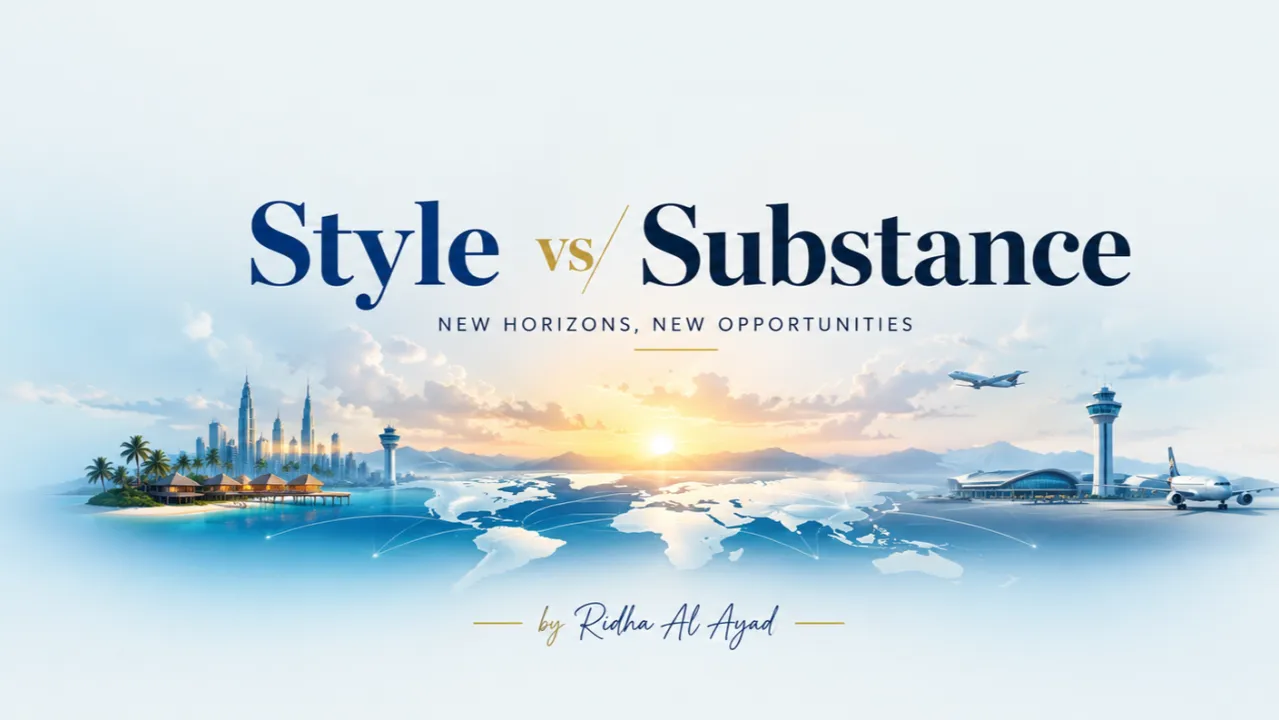
For centuries, geography defined opportunity.
Where you were born often determined who you would become. Nations were separated by oceans, cultures by distance, and businesses by borders. Language was a gatekeeper. Travel was expensive. Communication was slow.
That world is disappearing.
Marshall McLuhan's famous concept of the "Global Village", once considered visionary, has become our everyday reality. Digital networks, affordable air travel, cloud computing, artificial intelligence, and real-time communication have compressed time and distance to such an extent that a meeting in Dubai, a software team in Bangalore, a designer in Colombo, and a client in New York can all collaborate within minutes.
The question is no longer where you live. The question is what value you bring.
The Death of Traditional Borders
Economic borders are becoming increasingly porous.
A freelancer in Sri Lanka competes with professionals in Canada.
A startup in Nairobi can attract investors from Singapore.
A university lecture in London can be watched simultaneously by students across five continents.
Talent has become increasingly mobile not only physically, but digitally.
The competitive advantage of geography is gradually giving way to the competitive advantage of knowledge, adaptability, and execution.
Are Languages Becoming Obsolete?
Not exactly.
Technology is making language barriers smaller than ever. AI-powered translation, multilingual communication platforms, and increasingly sophisticated machine translation allow people to collaborate across languages more easily than at any point in history.
Yet this creates an interesting paradox.
Languages themselves are not disappearing overnight.
Their role as barriers is.
At the same time, language remains a carrier of culture, trust, identity, and nuance. Research continues to show that cultural communities retain distinct identities even in highly connected digital environments.
The future belongs not to those who speak one language perfectly, but to those who can communicate across cultures effectively.
Style Is Becoming Universal
See content credentials

Around the world we are beginning to dress similarly.
Consume similar media.
Use the same smartphones.
Follow the same influencers.
Listen to the same music.
Global culture increasingly influences how we present ourselves.
Style has become global.
Substance has not.
Integrity, expertise, empathy, creativity, and leadership remain difficult to imitate and impossible to automate completely.
Technology can amplify appearance.
Only character sustains reputation.
The New Definition of Success
In the twentieth century, success was often measured by location.
Today it is measured by contribution.
Companies recruit globally.
Ideas travel instantly.
Knowledge compounds faster than ever before.
The winners of the next decade will not necessarily be those with the strongest passports or the largest economies. They will be individuals and organizations that learn continuously, communicate across cultures, embrace technology, and solve meaningful problems.
Aviation: The Original Network of the Global Villa
See content credentials

Long before Zoom, Teams and AI translation began erasing distance digitally, aviation was already doing it physically.
After three decades in the airline industry, one lesson has become increasingly clear to me: an airline does not simply connect two airports. It connects economies, cultures, businesses and people.
The numbers demonstrate the scale of that connection. Global passenger demand reached a record in 2024, exceeding pre-pandemic 2019 levels by 3.8%. In 2025, traffic grew by another 5.3%, while international traffic expanded 7.1%. Airlines also achieved a record global passenger load factor of 83.6%.
But the more interesting story is not how many people are flying. It is what happens when places become better connected.
Research published by the OECD's International Transport Forum describes air connectivity as an important contributor to the competitiveness of cities, regions and countries. Greater connectivity can lower travel costs, facilitate trade and international contact, and is associated with productivity, foreign direct investment, R&D and trade specialisation.
Academic research reinforces the relationship, although importantly, it warns against assuming that aviation automatically produces identical economic benefits everywhere. A 2024 study covering 91 countries over 2002–2021 found a long-run relationship between economic growth and air transport, with the direction and strength varying geographically.
This is why I have always believed that an airline route is more than a line on a network map.
Every new route potentially shortens the distance between an idea and an investor, a producer and a market, a family and its loved ones, a tourist and a destination.
And perhaps this is aviation's greatest contribution to the idea of the global village.
Airlines have not eliminated national borders. But they have dramatically changed what those borders mean.
A passport may still tell us where we come from.
Connectivity increasingly determines how far we can go.
And that, perhaps, is another lesson in Style vs. Substance: the aircraft may be the visible style of aviation the liveries, lounges, cabins and technology but the real substance is the human and economic connection created every time it bridges two points on the globe.
Style vs. Substance
The shrinking world creates a powerful illusion.
When everyone can be seen, visibility feels like success.
But visibility is not influence.
Attention is not credibility.
Followers are not leadership.
In a borderless world, style may help you get noticed.
Substance determines whether the world remembers you.
As geography becomes less important, character becomes more important.
As borders become weaker, values become stronger.
As technology connects humanity, substance will increasingly become the only sustainable competitive advantage.
The future will not belong to the loudest voices.
It will belong to those whose substance can travel farther than their borders ever could.
Editor's Note: This article was written by Ridha Alayad, an airline sales and strategy leader with more than 30 years of experience in aviation and GSA (General Sales Agent) leadership across Sri Lanka and the Maldives. He currently serves as General Manager, Emirates, PSA and Maldives, and previously built the airline division at Universal Travels in Malé. It was originally published on LinkedIn and is republished here with the author's permission.
Leave a comment
Comments
No comments yet. Be the first to comment!
Latest News
News
Hajj Corporation to operate direct Gan-Jeddah Umrah flights during Ramadan
11 Oct 2026
Ooredoo Maldives
Ooredoo Maldives highlights AI and cybersecurity at Safety and Security Conference 2026
11 Oct 2026
News
Maldivian seeks up to two Airbus A220-300 aircraft for international routes
11 Oct 2026
MMA
MMA Governor Shares Maldives’ Experience in Reserve Management at Regional Forum
11 Oct 2026