

News
First Vilunveshi school garden opens at Hiriya School
The Ministry of Climate Change, Environment and Energy inaugurated the first "Vilunveshi School Garden" at Hiriya School. Minister Ali Shareef and Japan's Ambassador to the Maldives, Ishigami Rumiko, opened the garden, named "Garden of Growth."
07 July 2026, 08:31
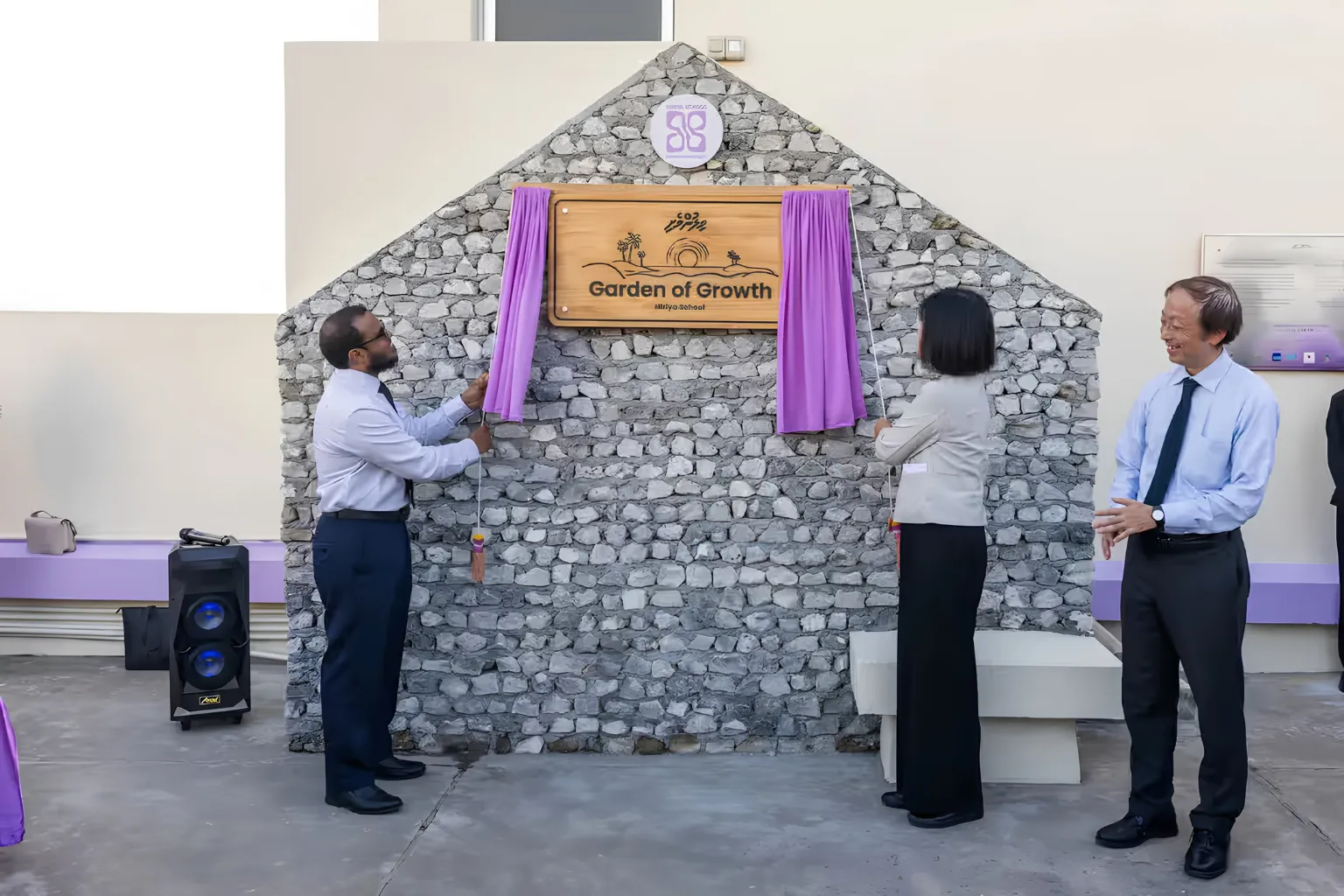
The Ministry of Climate Change, Environment, and Energy inaugurated the first garden under its "Vilunveshi School Garden" program at Hiriya School. The launch took place Monday. Minister of Climate Change, Environment and Energy Ali Shareef and Japan's Ambassador to the Maldives, Her Excellency Ishigami Rumiko, jointly inaugurated the garden.
The garden has been named "Garden of Growth."
The ministry said the program is a step toward building climate resilience among Maldivian students. It also aims to promote sustainable agriculture and environmental education in schools.
Programme background
The school garden initiative runs under the ministry's "Enhancing Climate Resilience and Food Security" (ECRFS) project. The Ministry of Fisheries, Agriculture, and Ocean Resources is a partner in the project. The Ministry of Education, Higher Education, and Skills Development is implementing the program in schools.
According to the ministry, the program's main goal is to give students hands-on farming experience. It also aims to build support for environmental protection and inform students about the impacts of climate change.
The ministry said the program additionally aims to raise awareness among students about nutrition and healthy food choices. It said students are expected to develop practical life skills and learn sustainable farming methods that are suited to a changing climate.
Minister points to space constraints
Minister Shareef said island communities are growing and buildings are getting taller as development continues. He said the situation makes it necessary to adopt new methods of food production.
He said vertical farming and hydroponic systems are becoming necessary as living space shifts toward taller buildings, leaving less land available for growing food.
Shareef recalled that Maldivian households once commonly grew fruits and vegetables in their yards. He said it is important to draw new generations of children toward farming in the same way.
He said school gardens are not just spaces to grow plants. He described them as valuable centers where students gain practical experience, develop an interest in sustainable farming, and learn the importance of food security and environmental protection.
The minister instructed teachers not to limit school gardens to environment club members alone. He said all students should take part and that garden-based learning should be included as a regular part of the curriculum.
Minister Shareef said students should also apply the skills they learn in school gardens at home. He said such an initiative would help raise awareness among families and contribute to building climate-resilient, sustainable communities.
Japan cites bilateral cooperation
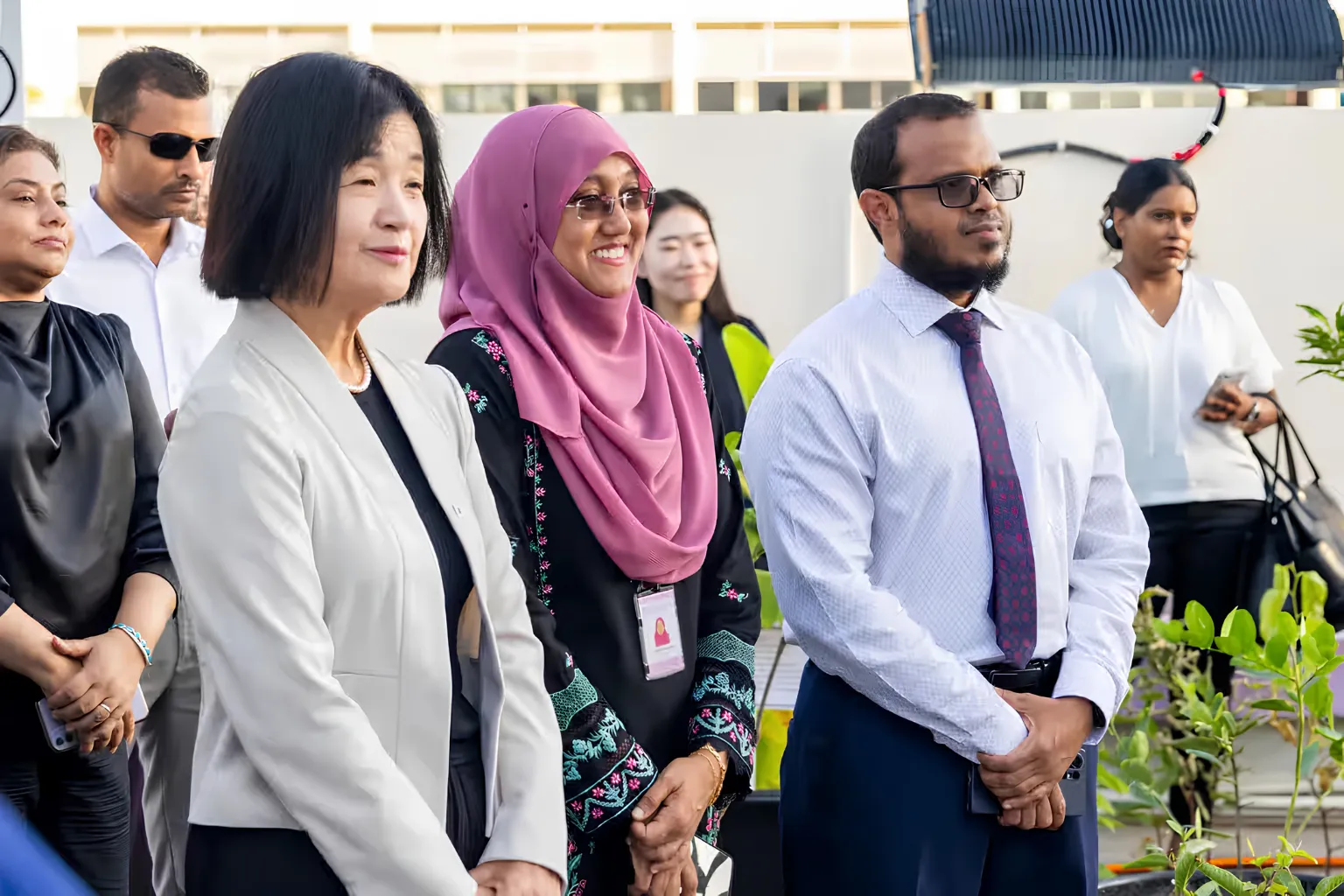
Ambassador Ishigami said the Vilunveshi School Garden programme adds an important link to the cooperation between the Maldives and Japan on climate resilience and food security.
She said the project falls under Japan's wider assistance to the Maldives. This assistance covers recovery from climate change impacts, advancement of the education sector, and support for community wellbeing, according to the ambassador.
Garden design
The ministry said the Hiriya School garden was built with modern facilities. These include:
Vertical farming systems for growing plants
Hydroponic systems dedicated to growing leafy vegetables
A separate area set aside for growing fruit
A rainwater harvesting system, used to irrigate plants in a cost-efficient way
Wider project scope
The ECRFS project's main objective is to strengthen the capacity of institutions and communities to cope with climate risks facing islands across the Maldives.
Under this project, the school garden program is planned to run in five schools nationwide, according to the ministry. The ministry did not name the remaining four schools in this announcement.
Funding
The ministry said the project is funded by the following:
The Asian Development Bank
The Japan Fund for Prosperous and Resilient Asia and the Pacific
The Ocean Resilience and Coastal Adaptation Trust Fund
The Government of Maldives, through its state budget
Leave a comment
Comments
No comments yet. Be the first to comment!
Latest News
News
Maldives’ Economy Grows 2.4% in August as Financial Services Lead Expansion
16 Oct 2026
News
Ooredoo launches ‘Masjiduna’ initiative to repair five mosques annually
15 Oct 2026
News
MIB Guesthouse Symposium 2026 begins with focus on sustainability and future of local tourism
15 Oct 2026
News
Foreign Minister Says Negative Investment Rhetoric Could Strain Diplomatic Ties
15 Oct 2026