

Opinion
Moody’s upgrade highlights the role of foreign exchange reforms and debt management
Mohamed Hilmy
10 October 2026, 03:00
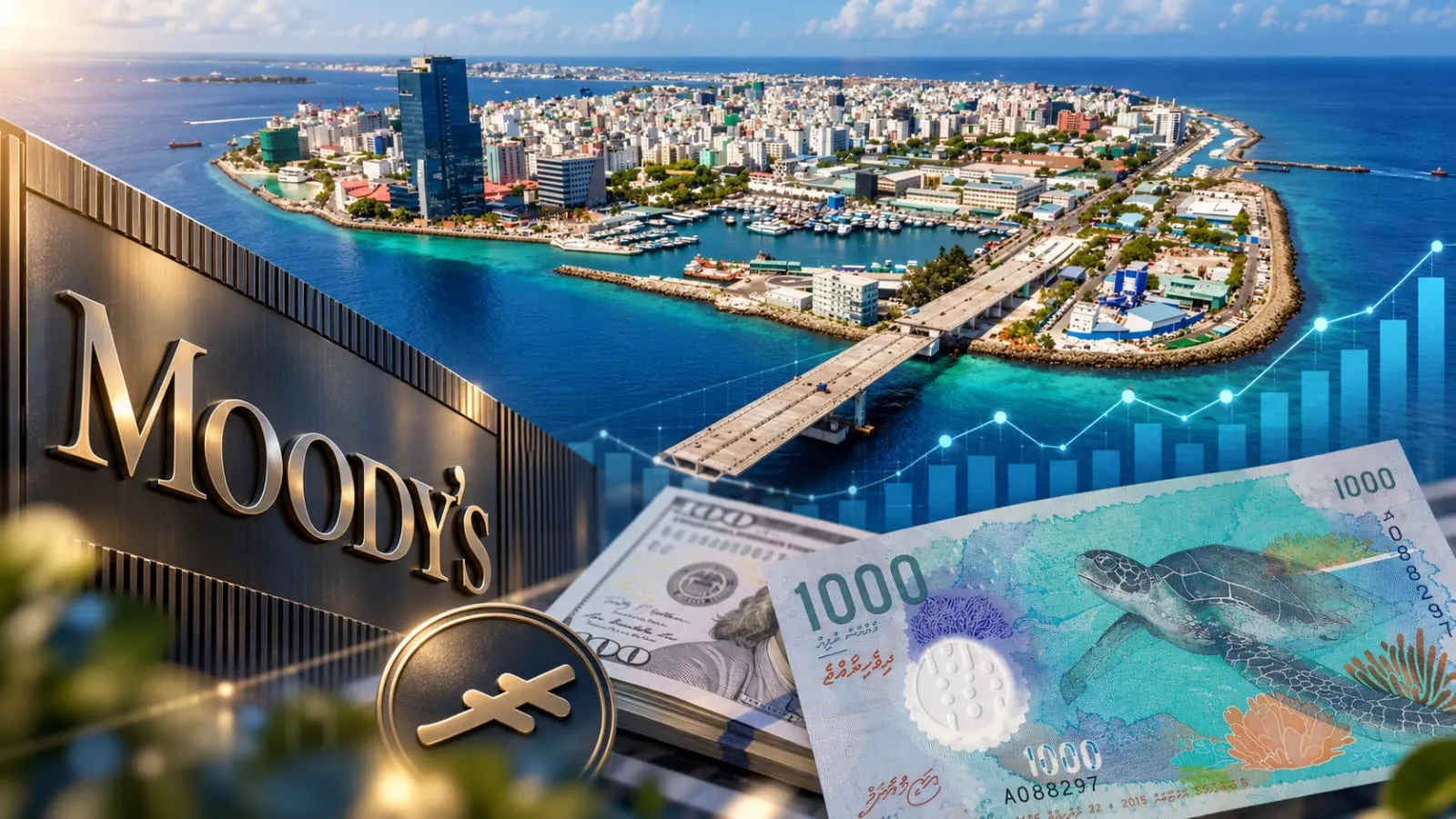
Global credit rating agency Moody’s has upgraded the Maldives’ sovereign credit rating from Caa2 to Caa1, with a stable outlook. The decision marks an important development in the country’s efforts to strengthen its external financial position.
In its assessment, Moody’s highlighted the role of foreign exchange reforms introduced since late 2024 in supporting foreign reserve accumulation and improving the country’s capacity to meet external obligations. Debt repayments, refinancing measures and continued access to bilateral and multilateral financing have also contributed to the improvement in the country’s financial position.
Moody’s recognises foreign exchange reforms
Moody’s noted that foreign exchange measures introduced since late 2024 are expected to increase the share of tourism earnings retained within the domestic financial system, supporting the accumulation of foreign reserves and savings in the Sovereign Development Fund (SDF).
“These measures include regulations that require a larger share of tourism-related foreign currency receipts to be deposited and converted through the domestic banking system,” the agency stated.
The agency also noted that reforms to capture foreign currency inflows, together with continued access to bilateral and multilateral financing, have strengthened the Government’s capacity to meet external obligations.
Moody’s expects the expanded deposit and conversion requirements to support the rebuilding of external buffers, provided implementation remains effective and tourism earnings remain broadly sustained.
The agency further observed that the measures had helped reserves absorb pressures arising from higher energy prices and softer tourist arrivals.
A repayment record behind the upgrade
The repayment of the USD 500 million sukuk in April was a significant part of the Maldives’ debt management efforts. The country also settled a USD 400 million currency swap facility and repaid Treasury bills totalling USD 100 million in May and September.
In addition, the extension of the maturity of a USD 100 million Eurobond to 2031 helped ease near-term repayment pressures.
These measures addressed immediate financing obligations and reduced some of the risks associated with upcoming repayments. Alongside foreign exchange reforms and efforts to strengthen financial buffers, they contributed to the improvement in the country’s external financial position.
Reform is important for a better economic future
As a small island economy, the Maldives remains vulnerable to external economic shocks, rising import costs and pressures on foreign exchange reserves. These challenges highlight the importance of policies that strengthen external stability and support the sustainable management of foreign currency resources.
Effective foreign exchange reforms, sound reserve management and stronger policy coordination are important to maintaining adequate liquidity buffers and improving the economy’s ability to withstand external shocks.
Sustaining these gains will require continued effective implementation of reforms, careful management of public finances and measures that support the country’s long-term economic resilience.
Why stronger foreign currency buffers matter
Repaying debt addresses obligations that have fallen due, while building reserves strengthens the capacity to meet future external payments.
This distinction is particularly important for the Maldives, where tourism is a major source of foreign currency and imports and external debt repayments create significant demand for it. The ability to retain and mobilise sufficient foreign exchange is therefore an important part of the country’s financial resilience.
Stronger foreign exchange buffers and SDF savings support efforts to reinforce the country’s external position and improve its capacity to withstand financial shocks. These resources can help the country manage periods of heightened external pressure and meet its international obligations.
The rating decision reflects the broader improvement in the factors supporting the Maldives’ repayment capacity, including foreign exchange reforms, debt management measures and access to external financing.
The next test is sustaining the gains
Despite these developments, external risks remain. The Ministry of Finance and Public Enterprises has acknowledged risks associated with the conflict in the Middle East and higher energy prices, while reaffirming the Government’s commitment to protecting vulnerable households, supporting economic activity and keeping expenditure within the approved budget.
Managing these competing priorities while maintaining fiscal discipline and strengthening external buffers will remain important to sustaining the improvement in the country’s financial position.
Moody’s upgrade marks progress in the Maldives’ efforts to strengthen its credit standing. Maintaining that progress will depend on the continued implementation of reforms, prudent debt management, effective reserve management and the ability to respond to changing external conditions.
Leave a comment
Comments
No comments yet. Be the first to comment!
Latest News
Ooredoo Maldives
Ooredoo Maldives Continues ‘Grow with Ooredoo’ Initiative with Tree Planting in Dhiffushi
08 Oct 2026
News
BML’s new lending reaches MVR 12.1 billion, surpassing full-year 2025 total
08 Oct 2026
News
BML supplies USD 722 million to customers, nearly matching last year’s total
08 Oct 2026
News
BML records highest-ever nine-month profit of MVR 1.93 billion
08 Oct 2026