

News
Manta Ray Tourism Generates Over US$311 Million Annually for Maldives, Study Finds
According to the study, manta ray tourism accounted for approximately 2.6% of the Maldives' gross domestic product (GDP), demonstrating the significant contribution of the country's marine biodiversity to the national economy.
Mohamed Hilmy
14 June 2026, 12:14
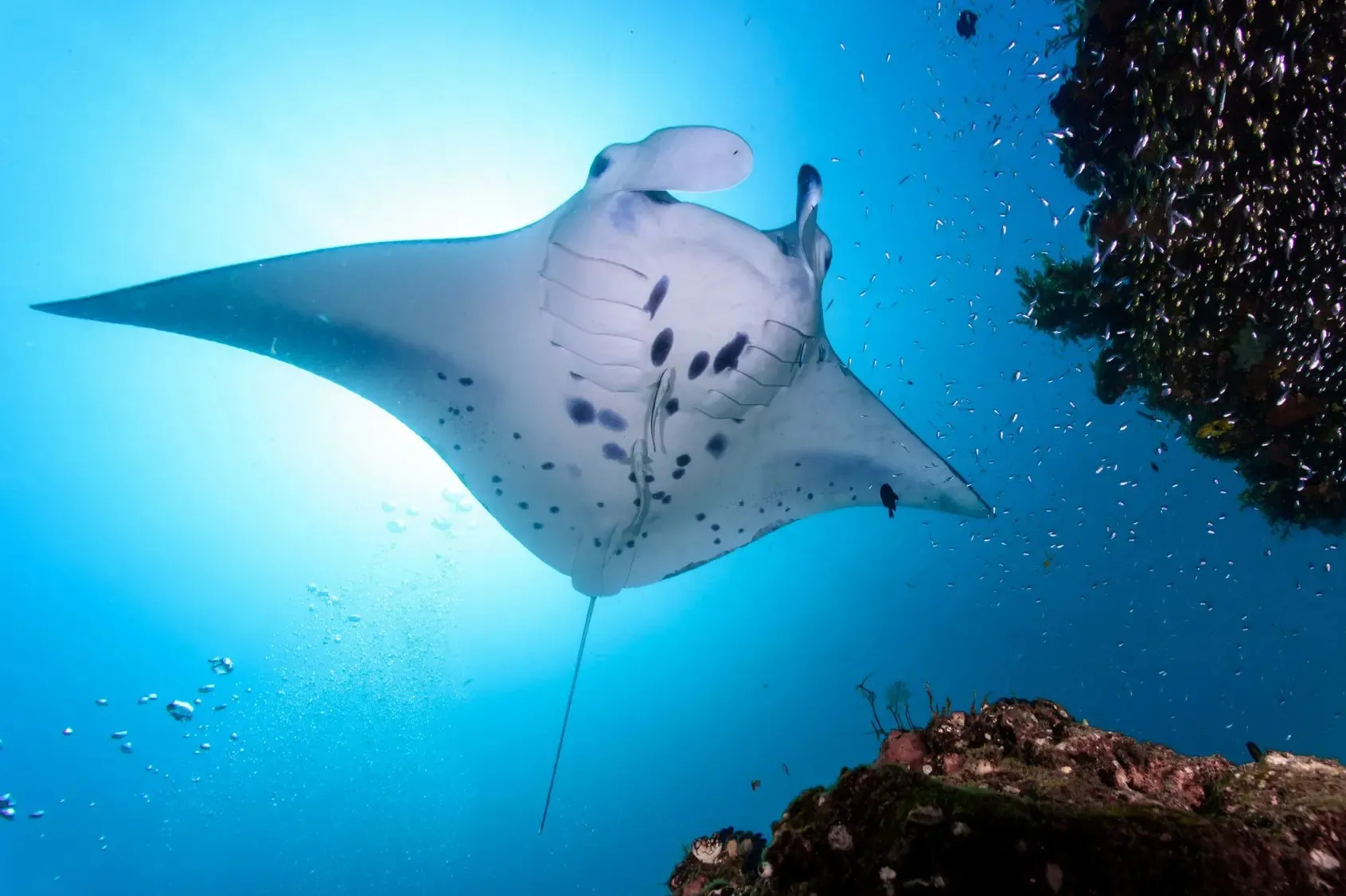
Manta ray watching tourism contributes more than US$311 million annually to the Maldivian economy, according to a new study published in PLOS ONE, underscoring the economic importance of marine conservation in the country.
The study, titled Valuing conservation and natural wealth: The blue economy of manta ray watching in the Maldives, provides an updated national valuation of the direct economic and socio-economic benefits of manta ray watching (MRW) and highlights the growing role of marine wildlife tourism in supporting the Maldives' blue economy.
Researchers estimate that manta ray watching generated approximately US$227.3 million in economic value in 2021. This includes around US$39 million from manta-focused diving and snorkeling activities and a further US$188.3 million in associated visitor spending.
According to the study, manta ray tourism accounted for approximately 2.6% of the Maldives' gross domestic product (GDP), demonstrating the significant contribution of the country's marine biodiversity to the national economy.
The research also found that the industry has expanded substantially over the past decade. Since 2008, the value of manta ray watching tourism has increased by around 380%, reflecting growing international demand for marine wildlife experiences in the Maldives.
Researchers noted that nearly 80% of tourism operators across the country now offer manta ray watching excursions, making it one of the most widely available wildlife tourism activities in the Maldives.
Beyond direct economic benefits, the study highlights the broader socio-economic value of manta ray conservation, including employment opportunities, support for local businesses, and the enhancement of the Maldives' reputation as a world-class marine tourism destination.
The findings reinforce the importance of protecting manta ray populations and their habitats, with researchers arguing that conservation measures not only benefit marine ecosystems but also provide substantial long-term economic returns.
The Maldives is home to one of the world's largest known populations of reef manta rays, making the country a leading destination for manta ray encounters and marine ecotourism.
Leave a comment
Comments
No comments yet. Be the first to comment!
Latest News
News
IMF projects Maldives growth to recover to 3.8% in 2027 after weak 2026
13 Oct 2026
News
MIRA collects MVR 2.69 billion in September, 12.7% above forecast
12 Oct 2026
News
BML Earns Global Recognition on Forbes’ World’s Top Performing Banks 2026 List
12 Oct 2026
Ooredoo Maldives
Ooredoo Maldives offers 10 free registration slots for Doha Marathon 2027
12 Oct 2026