

Features
Bribery is a Curse: Friday Sermon Warns Maldivians Against Corruption as Country Ranks 91st Globally
This Friday's national sermon warned Maldivians against corruption and bribery, calling them among the gravest sins in Islam. Titled "The Dangers of Corruption and Bribery" and authored by Sheikh Ateef Abu Bakr, the sermon said corruption is a betrayal of public trust and that both giving and accepting bribes incur Allah's curse.
Sham'aan Shakir
03 July 2026, 06:46
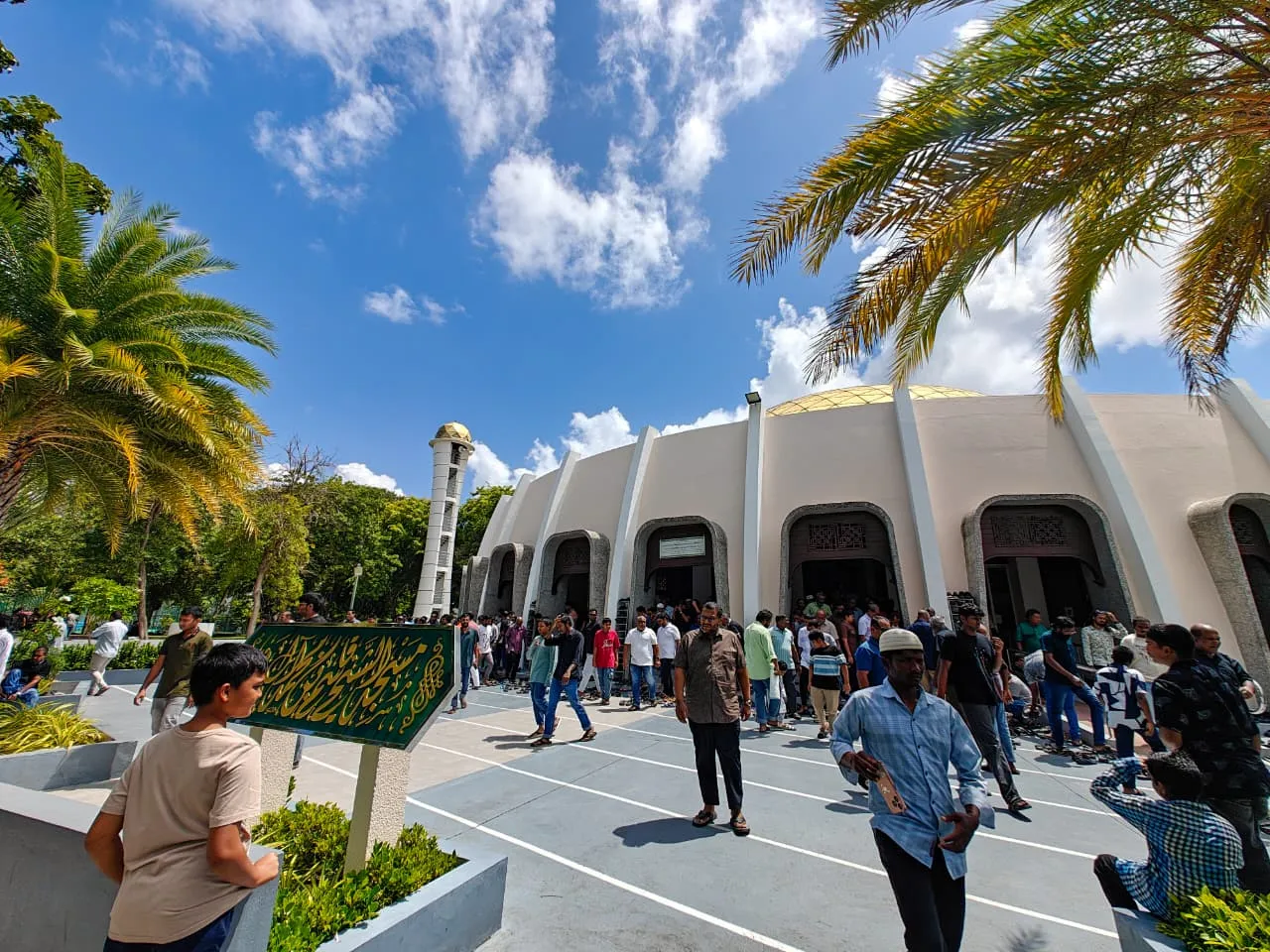
This Friday's sermon delivered a direct warning against corruption and bribery, calling them among the gravest sins a person can commit. The sermon, titled "The Dangers of Corruption and Bribery," was read simultaneously at mosques across the Maldives on 3 July 2026. It was authored by Sheikh Ateef Abu Bakr and issued by the Ministry of Islamic Affairs and Endowments.
The message lands at a time when corruption remains one of the most persistent governance challenges in the country. The Maldives scored 39 out of 100 on the 2025 Corruption Perceptions Index published by Transparency International, ranking 91st out of 182 countries.
The sermon defined corruption as any act committed by abusing authority or misusing an entrusted position to obtain an unlawful personal benefit. It said positions and responsibilities are trusts for which people will be held accountable.
"Using your position or influence for personal gain is an act of betrayal of that trust," the sermon stated, citing Surah Al-Anfal (8:27): "O you who believe, do not betray Allah and the Messenger, nor betray your trusts while you know."
On bribery specifically, the sermon was unambiguous. It defined a bribe as anything given to obtain what one has no right to or to make falsehood appear as truth. It cited a hadith narrated by Abdullah bin Amr and reported by Ahmad, Abu Dawud, al-Tirmidhi, and Ibn Majah, which al-Tirmidhi classified as hasan sahih: "The Messenger of Allah (peace be upon him) cursed the one who offers a bribe and the one who accepts it."
The sermon warned against a dangerous mindset that has taken hold in some quarters. "Even if some individuals among us have come to believe that corruption is simply the way things are because of how widespread its evil practices have become in society, this is an extremely dangerous mindset," it said.
It cited a hadith recorded in Sahih Muslim: "Whoever among you is appointed by us to a position of responsibility and conceals from us even a needle or anything greater than it has committed misappropriation and will come carrying it on the Day of Resurrection."
The sermon said corruption destroys social justice, increases poverty, and undermines the foundations of the economy. It cited the Quran: "And do not consume one another's wealth unjustly or offer it as a bribe to the authorities so that you may wrongfully consume a portion of other people's wealth while you know it is unlawful." (Surah Al-Baqarah, 2:188)
The concern is grounded in a well-documented reality. One of the most significant corruption cases in the Maldives was the MMPRC scandal, which involved the embezzlement of over USD 90 million by government officials and the lease of at least 50 islands to private companies without public tender. The government has spent MVR 1.6 billion in compensation over four years alone, largely due to the cancellation of contracts executed under corrupt arrangements.
The Anti-Corruption Commission launched its 5th Strategic Plan in April 2026, prioritizing awareness programs for all age groups, identifying high-risk state-owned enterprises, and strengthening procurement monitoring. A key focus of the plan is also preventing corruption within the political sphere, including advocating for measures to ensure fair elections and transparent recruitment.
The sermon said the root cause of corruption is greed. It cited the Prophet (peace be upon him): "True wealth is not an abundance of worldly possessions; rather, true wealth lies in the contentment of the soul." The hadith is recorded in both Sahih al-Bukhari and Sahih Muslim.
It called on Maldivians to build their lives on integrity and self-contentment. "Even if corruption and bribery become widespread, do not be deceived into thinking they are normal or acceptable," the sermon stated. "Fear the Day when you will be disgraced and exposed before Allah."
The sermon closed with a call for the country to be prosperous and free from corruption and included a supplication for the strength of Maldivian economic industries, fisheries, and agriculture.
Under the Maldivian Penal Code, bribery offenses are covered under Article 510, misuse of government authority under Article 513, illicit enrichment under Article 515, and embezzlement of state property under Article 516. Complaints can be submitted to the Anti-Corruption Commission, which operates a confidential whistleblower protection policy.
Leave a comment
Comments
No comments yet. Be the first to comment!
Latest News
News
Hajj Corporation to operate direct Gan-Jeddah Umrah flights during Ramadan
11 Oct 2026
Ooredoo Maldives
Ooredoo Maldives highlights AI and cybersecurity at Safety and Security Conference 2026
11 Oct 2026
News
Maldivian seeks up to two Airbus A220-300 aircraft for international routes
11 Oct 2026
MMA
MMA Governor Shares Maldives’ Experience in Reserve Management at Regional Forum
11 Oct 2026