

Features
Maldives Launches National AI Lab, Vowing to Build AI on Its Own Terms
The Maldives launched its national AI centre, the Maldives AI Lab, on 18 May 2026, jointly operated by MINDCo and the Bank of Maldives under the Maldives 2.0 agenda. The centre is structurally embedded in the national digital roadmap and targets 25 AI use cases across government by 2028, covering sectors from healthcare to tourism across 187 inhabited islands.
Sham'aan Shakir
24 May 2026, 12:51
The Maldives has launched a national artificial intelligence centre with a clear declaration: the country will not wait for AI to be built for it elsewhere.
The Maldives AI Lab was officially established on 18 May 2026, jointly operated by the Maldives Innovation and Digital Company (MINDCo) and the Bank of Maldives (BML). It is led by the Ministry of Homeland Security, Labour and Technology, and regulated by Maldives Digital Service. It sits under President Dr. Mohamed Muizzu's Maldives 2.0 Digital Transformation initiative and operates from a dedicated platform at ailab.mv.
The centre is not a conference or a policy document, according to Siyah Khaleel, Chairman of MINDCo and Digital Transformation Strategist at the President's Office. It is, he writes, a structured national delivery center with a mandate to build lasting capability, develop local talent, and move AI from scattered interest into coordinated national action.
This report is based on the piece that Siyah Khaleel posted on LinkedIn.
The Global Stakes
The launch comes as the global AI divide widens rapidly. According to data cited by Siyah, 78 percent of organizations globally reported using AI in 2024, up from 55 percent the year before. High-income countries account for 87 percent of notable AI models, 86 percent of AI startups, and 91 percent of venture capital funding, despite representing only 17 percent of the world's population.
For small island states, the risk is stark. Nations that do not build AI capability now risk being permanently on the receiving end of technologies designed for contexts that look nothing like their own.
What Leaders Said
Minister of Homeland Security, Labour and Technology Ali Ihusaan, who officially launched the centre, put the national ambition plainly. "Maldives cannot have a future where AI just happens to us," he said. "Through Maldives AI Lab it will happen with us, by us, for us."
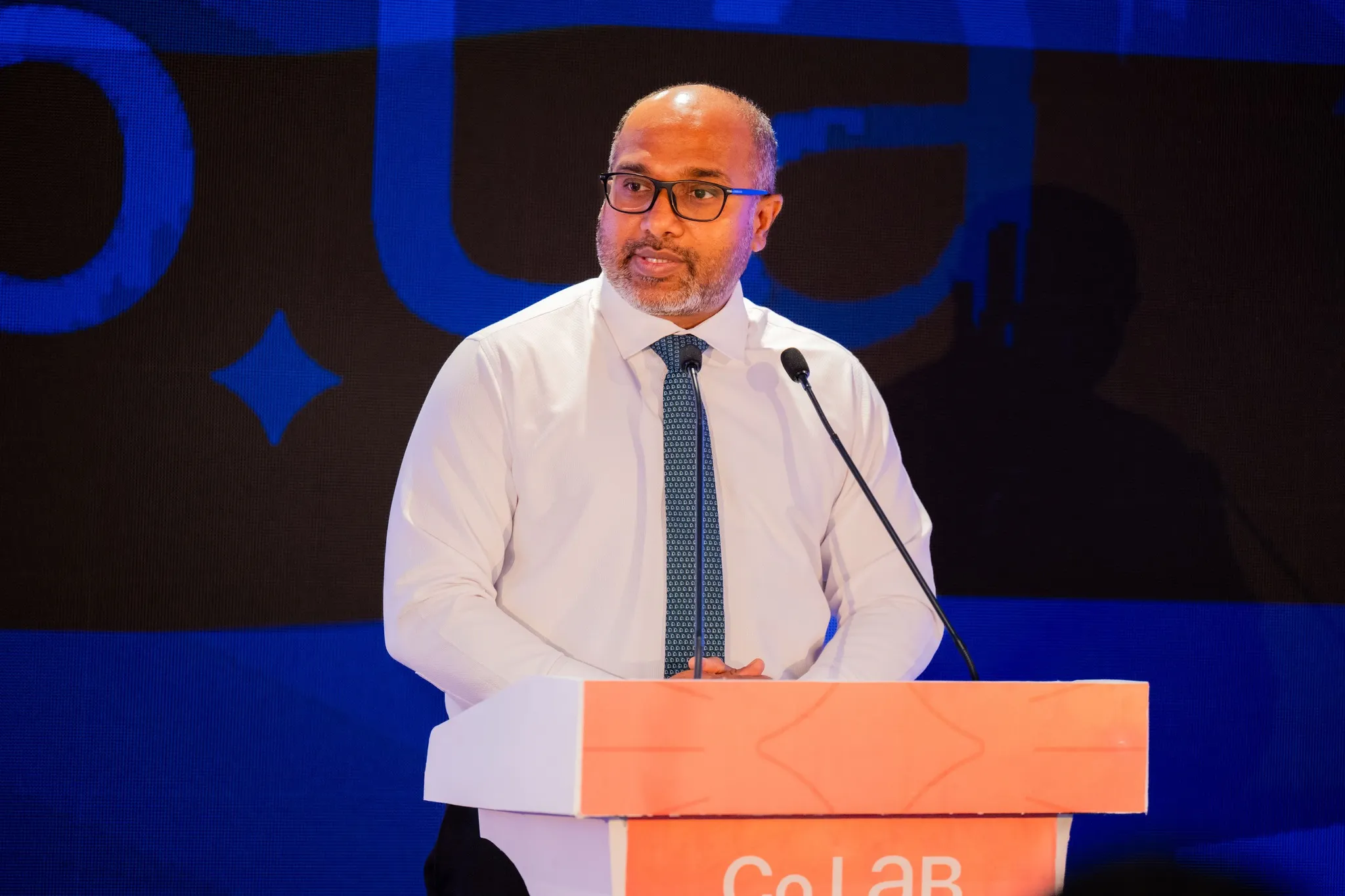
MINDCo Managing Director Saeeda Umar described the centre as a structural shift. "It moves us from scattered interest to a nationwide, structured delivery that will future-proof public investments, develop local talent, and improve the efficiency of public service delivery," she said.
BML CEO Mohamed Shareef emphasised the financial sector's role from the outset. He said AI has the potential to improve how institutions understand customer needs, manage risks, deliver public services, detect fraud, strengthen cybersecurity, and make faster, more informed decisions. Technology, he noted, is no longer simply supporting operations but shaping the future of customer experience, accessibility, and economic participation.
Where It Sits Within Maldives 2.0
The Maldives AI Lab is embedded in Pillar 8 of the Maldives 2.0 Digital Transformation framework, under Digital Economy Development and Innovation. It connects directly to Pillar 2, which covers Data Sharing and Governance. This structural placement means the centre is not a standalone experiment. It is part of the national digital roadmap.
Priority sectors for AI development include education, health and welfare, public finance, the environment, and tourism. These are the sectors that Maldivians interact with daily across 187 inhabited islands. The target is to implement 25 AI use cases within the public sector by the end of 2028.
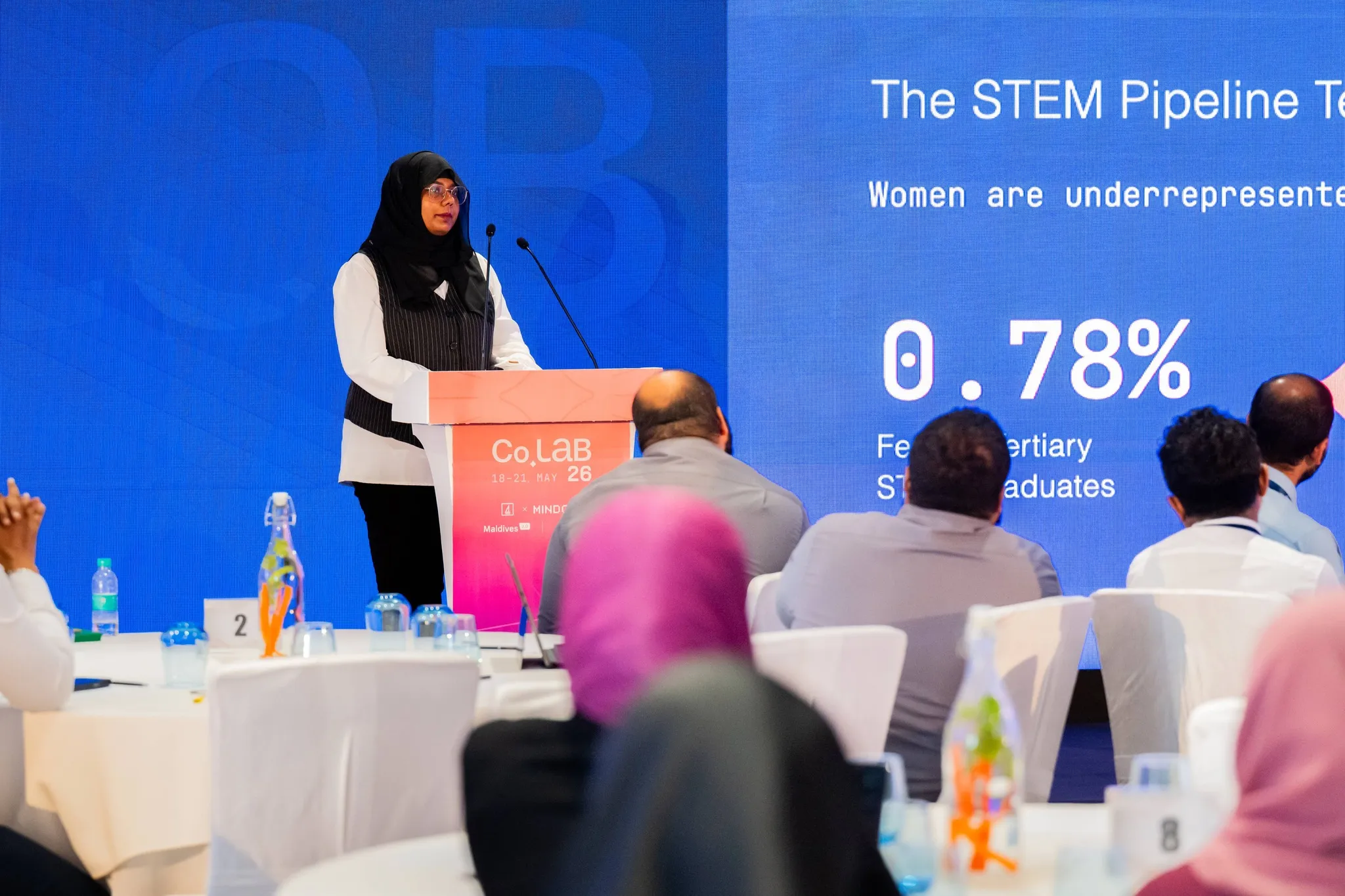
Co.Lab 26, a four-day national programme that opened alongside the AI Lab on 18 May, serves as the centre's first major initiative. Solutions developed during the hackathon will feed directly into a long-term development pipeline managed by the Maldives AI Lab.
Local Builders Already Leading
The launch arrives alongside evidence that Maldivian technologists have not been waiting. Several local companies have already built working AI products.
Synetecs, named Startup of the Year at the inaugural Maldives MSME Awards 2025, developed Legal Notes AI to streamline legal research and drafting for legal professionals and law students in the Maldives. The company also represented the country at the Startup Grind Global Conference 2026 in Silicon Valley.
Javaabu built DhivehiGPT, a platform that enables Dhivehi-first AI interaction. It has been profiled internationally as an example of responsible, culturally grounded AI development. The platform addresses one of the most fundamental barriers to digital inclusion in the Maldives: the near-total absence of the Dhivehi language from global AI systems.
Serialtech Lab, based in Addu City, built Dhavana AI, a Dhivehi AI suite covering content generation, speech-to-text, text-to-speech, optical character recognition, education tools, and bilingual research.
These are working products built by Maldivians for Maldivians, often without the infrastructure or institutional support that developers in larger markets take for granted. Siyah notes that the Maldives AI Lab changes that equation. It provides local talent with a national delivery pipeline, real government use cases to build against, and a structured path from prototype to deployment. The builders, he writes, were already here. Now there is a home for what they build.
Over the coming months, the Maldives AI Lab plans to engage directly with local builders and explore how existing products can be applied to real public sector needs. Siyah describes it not as a call for proposals but as a call for collaboration.
What It Means in Practice
The center offers distinct implications for different groups.
For citizens, it promises government services that are faster, more consistent, and less dependent on which island a person lives on. For the private sector, it opens a national platform to test, develop, and deploy AI solutions alongside government. For local talent, it provides a structured pipeline with real projects, real mentors, and real implementation pathways. For the economy, the scale of potential gains is significant. In OECD countries, public expenditure averages roughly 40 percent of GDP, meaning even marginal efficiency gains from AI yield substantial fiscal returns. For a small economy delivering public services across a dispersed archipelago, efficiency is not a luxury, Siyah argues. It is essential.
Institutional Clarity
The governance structure behind the center is defined. The Ministry of Homeland Security, Labor, and Technology leads. Maldives Digital Service regulates it. MINDCo and the Bank of Maldives operate. The Maldives AI Lab functions as the coordinating center where policy, technology, and delivery connect.
Siyah says that kind of institutional clarity is what separates initiatives that last from ones that do not. The Maldives is small, he notes, but small countries can move fast, make decisions with national coherence, and build systems that genuinely fit their people. The AI Lab, he writes, is the beginning of using that advantage well.
Leave a comment
Comments
No comments yet. Be the first to comment!
Latest News
News
BML Earns Global Recognition on Forbes’ World’s Top Performing Banks 2026 List
12 Oct 2026
Ooredoo Maldives
Ooredoo Maldives offers 10 free registration slots for Doha Marathon 2027
12 Oct 2026
News
Vietjet flights to offer Maldivians new travel options from December
12 Oct 2026
News
Alabbar outlines new opportunities for Maldivian businesses through Rasmalé project
12 Oct 2026