

Features
The Maldives May Not Be at the World Cup, But One Maldivian Was
While World Cup qualification remains a distant dream, Mohamed Saeed proved that a Maldivian could stand among football's elite on the sport's grandest stage.
20 June 2026, 04:27
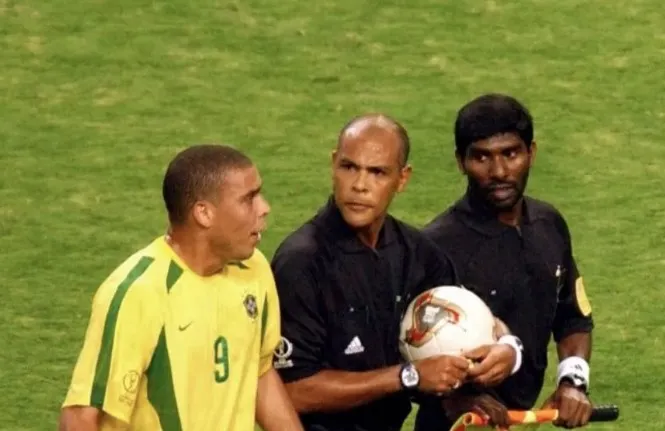
Every four years, as the FIFA World Cup captivates billions around the globe, Maldivians join the excitement. We cheer for our favourite teams, debate great goals and dream of witnessing our own nation one day take its place among football's elite.
For most Maldivians, however, seeing the national team play in a FIFA World Cup remains a distant dream.
The reality is that the Maldives is still far from competing on football's biggest stage. Compared with the world's footballing nations, we face limitations in population size, infrastructure, resources, facilities and player development pathways. While the passion for football runs deep across our islands, reaching the World Cup as a competing nation remains one of the toughest challenges in international sport.
Yet, amid that reality, there is one remarkable achievement that deserves to be remembered and celebrated every World Cup season.
Twenty-four years ago, a Maldivian represented the nation at the FIFA World Cup.
That man was Mohamed Saeed.
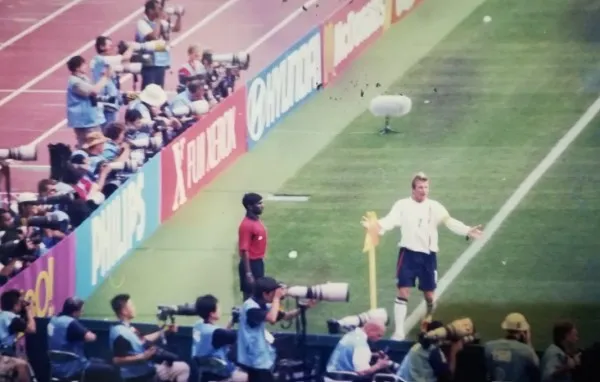
While the Maldives was not competing in the 2002 FIFA World Cup in South Korea and Japan, Saeed was there as one of the tournament's assistant referees. In a competition featuring the world's greatest players, coaches and officials, he earned his place among football's elite.
It was no small accomplishment.
Only a handful of referees and assistant referees from around the world are selected for a FIFA World Cup. The competition for places is intense, and even fewer officials are chosen from Asia. For a Maldivian official to break into that exclusive group remains one of the most significant achievements in the history of Maldivian football.
What makes Saeed's story even more remarkable is the quality of matches he was entrusted to officiate.
Working alongside legendary Italian referee Pierluigi Collina, widely regarded as one of the greatest referees in football history, Saeed was appointed to some of the tournament's biggest and most memorable matches.
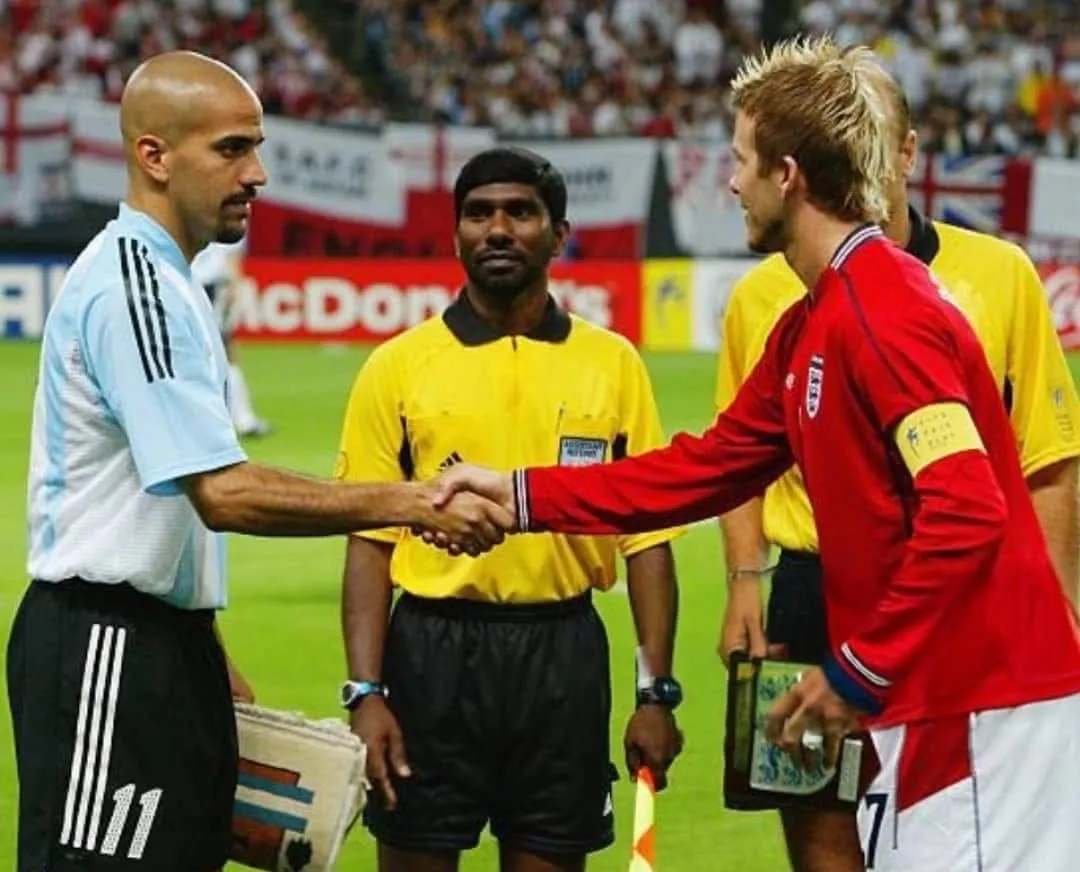
His World Cup debut came in the group-stage clash between Argentina and England, one of football's greatest rivalries. He then officiated Germany versus Cameroon before earning excellent assessments that ranked him among the top-performing Asian assistant referees during the group stage.
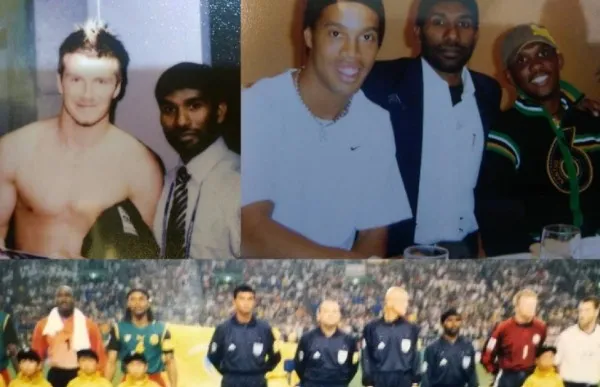
Those performances secured his place in the knockout rounds.
He was subsequently appointed to Brazil versus Belgium in the Round of 16 and then to the quarter-final between Brazil and England. Brazil would go on to win the tournament, making Saeed part of the officiating team for matches involving the eventual world champions.
The Argentina-England encounter remains particularly special.
During that match, Saeed played an important role in helping Collina make the decision to award England a penalty. David Beckham converted the spot kick, scoring the only goal in England's famous victory. For Beckham, it was a moment of redemption after the red card he received against Argentina during the 1998 World Cup in France.
But Saeed's achievements extended well beyond the 2002 World Cup.
Having received his FIFA referee badge in 1993, he steadily built an impressive international career. He officiated at the 2001 FIFA Confederations Cup, including the semi-final between Brazil and France. He was named Asia's Best Assistant Referee and also worked at three FIFA Under-20 World Cups. In addition, he officiated in two AFC Asian Cup finals, further cementing his reputation as one of the continent's leading officials.
Throughout his career, Saeed shared the field with some of football's greatest names.
He officiated matches involving Ronaldo, Ronaldinho, Rivaldo, Cafu, Gabriel Batistuta, Marcel Desailly, Javier Zanetti and many other stars who defined an era of world football.
There is another part of the story that Maldivians often remember with pride.
When Saeed arrived at the World Cup, some fellow officials reportedly did not even know where the Maldives was. Our tiny island nation was unfamiliar to many in the global football community.
By the time the tournament ended, they knew.
Through professionalism, excellence and consistency, Saeed had put the Maldives on the map.
His achievement serves as a powerful reminder that while our national team may still be far from qualifying for the World Cup, Maldivians are capable of reaching the highest levels of the game.
Football success is not measured only by goals scored or matches won. Sometimes it is measured by the ability to stand shoulder to shoulder with the very best in the world and earn their respect.
Mohamed Saeed did exactly that.
As another World Cup unfolds and Maldivians once again dream of seeing their country on football's grandest stage, it is worth remembering that a Maldivian has already been there — and not merely as a spectator.
He was part of the show.
Leave a comment
Comments
No comments yet. Be the first to comment!
Latest News
News
Five of eight listed companies advance sustainability reporting ahead of 2026 requirement
19 Oct 2026
News
MPL holds stakeholder meeting on Thilafushi Port Project
19 Oct 2026
News
VIA Security Committee meets to strengthen security coordination
19 Oct 2026
STO
STO leads listed market with 97.5% governance compliance in CMDA review
19 Oct 2026