

International
Nvidia Deepens Japan AI Push With New Robotics Model and National Computing Project
Nvidia has unveiled a new AI model for robots and expanded its partnerships in Japan during a two day visit by chief executive Jensen Huang.
17 July 2026, 15:25
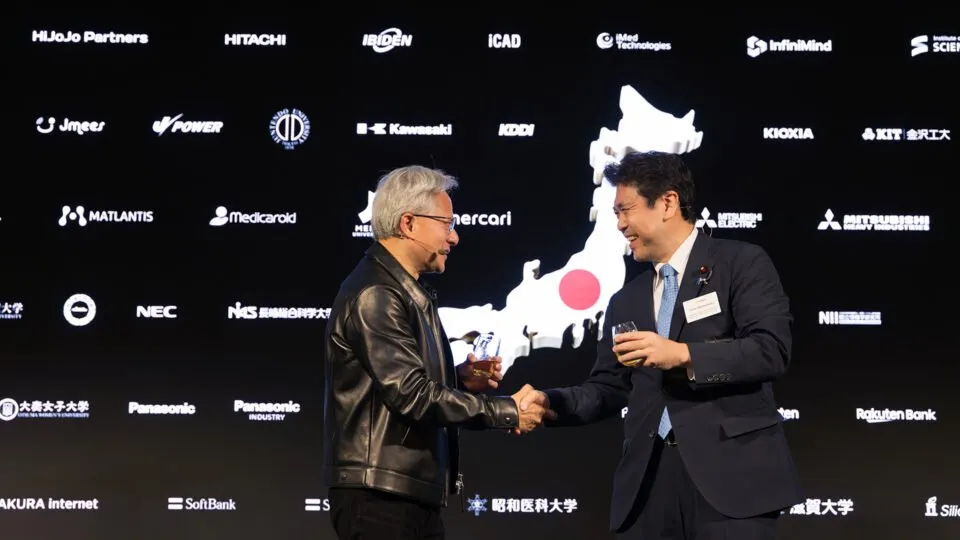
Nvidia has announced a new artificial intelligence model for robots and expanded its partnerships with Japanese industry, as the chipmaker deepens its push into what it calls physical AI.
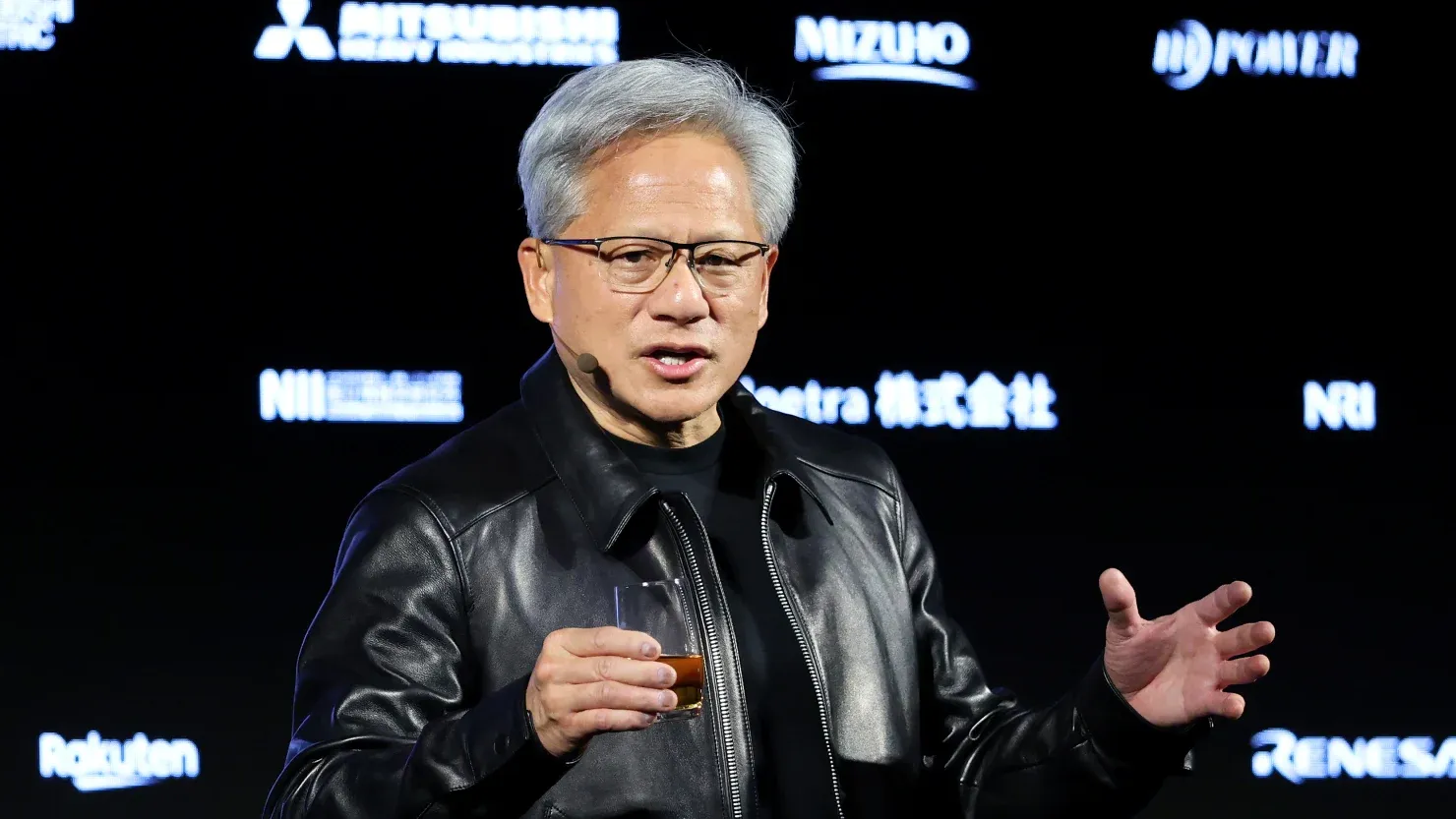
The announcements came during a two-day visit to Japan by Nvidia founder and chief executive Jensen Huang. They include a new AI model called Cosmos 3 Edge, a large computing project backed by Japan's government, and new commitments from Japanese manufacturing and technology firms.
Nvidia said the new model, Cosmos 3 Edge, is a "world model." Unlike large language models, which mainly process text, world models are built to help robots and vision based AI systems understand and move through physical spaces in real time. The model has 4 billion parameters and can run on Nvidia's Jetson edge computing hardware, according to the company.
The model follows Cosmos 3, which Nvidia launched in May.
National AI infrastructure project
Nvidia said it is working with Japanese company Noetra Corp to build a large computing facility using 13,750 Nvidia Vera CPUs and 27,500 Nvidia Rubin GPUs. Nvidia said the facility will provide 140 megawatts of data center capacity.
The project is backed by Japan's Ministry of Economy, Trade and Industry, known as METI. It will support a government program called the FRONTia Project, which aims to develop AI models for robotics, manufacturing, logistics and healthcare.
Nvidia described the project as the world's first national AI infrastructure built specifically for physical AI. This characterization comes from Nvidia's own announcement and has not been independently verified.
"Japan has launched the FRONTia Project, which will serve as the core of the country's physical AI ecosystem," said Ryosei Akazawa, Japan's Minister of Economy, Trade and Industry, according to Nvidia's statement.
Hironobu Tamba, chief executive of Noetra, said the project would make the results of the company's research broadly available. "Bringing physical AI into the real world requires enormous computing, data and foundational technologies," Tamba said, adding that no single company can solve the challenge alone.
Japan's government released an AI robotics strategy in March. It set a target of capturing more than 30 percent of the global AI robotics market by 2040, an opportunity the government estimates at about 133 billion dollars. Nvidia has not independently verified this market estimate, which originates from the Japanese government.
Industrial partners join Cosmos coalition
Nvidia said several major Japanese companies plan to join its Cosmos Coalition, a group of firms working on physical AI and robotics. Companies named by Nvidia include Fujitsu, Hitachi, Honda R&D, Kawasaki Heavy Industries, Kubota, NEC, Sony, SoftBank, Yaskawa Electric and Fanuc.
Fujitsu said it is exploring a shared physical AI control platform with Fanuc, Yaskawa Electric and Kawasaki Heavy Industries. According to Nvidia, the group intends to use the platform for robot learning, simulation and digital twin development.
SoftBank said it is building a physical AI platform using Nvidia's Cosmos and Omniverse technology. The company is also working on AI enabled telecom networks intended to support physical AI devices.
Nvidia also introduced new software called Metropolis, which it said can speed up the development of vision based AI systems. The company said the tools can cut development time by at least six times, a figure that comes from Nvidia and has not been independently confirmed.
Healthcare and research expansion
Nvidia said Japanese pharmaceutical companies, including Astellas Pharma, Daiichi Sankyo and Ono Pharmaceutical, are using its AI tools for drug discovery research.
Separately, Japan's Riken research institute has begun operating two Nvidia based supercomputers. One system, called Rikyu, uses 1,600 Blackwell graphics processors for research in life sciences and materials science. A second system, called Roquo, combines Nvidia hardware with quantum computers for hybrid computing research.
Context
Nvidia is the world's largest maker of AI chips. The company has been expanding its business beyond cloud based AI systems into robotics and industrial automation, an area it calls physical AI.
Huang has promoted Japan as a strategic partner for this shift, citing the country's manufacturing base. "Japan invented modern manufacturing. Now, it has the opportunity to reinvent it for the age of intelligent industries," Huang said in a statement released by Nvidia.
The expansion in Japan follows Nvidia's broader efforts to build AI partnerships across Asia, as governments in the region compete to attract AI infrastructure investment.
Leave a comment
Comments
No comments yet. Be the first to comment!
Latest News
News
Ras Malé Project Expected to Boost State Revenue with USD 340 Million in Annual TGST
25 Oct 2026
News
Akuru Type Marketplace wins two ICT awards at Maldives Expo 2026
25 Oct 2026
News
Qatar Airways begins three daily Doha–Malé flights
25 Oct 2026
President Muizzu
SMEs to receive overseas USD payments through BML Gateway from November
25 Oct 2026