

News
MMA names Rahaa Resort and South Palm Resort for failing to exchange dollars
According to the MMA, 78 percent of resorts classified under Category A fully complied with dollar exchange requirements, while 20 percent failed to exchange the required amount of foreign currency.
23 August 2026, 13:12
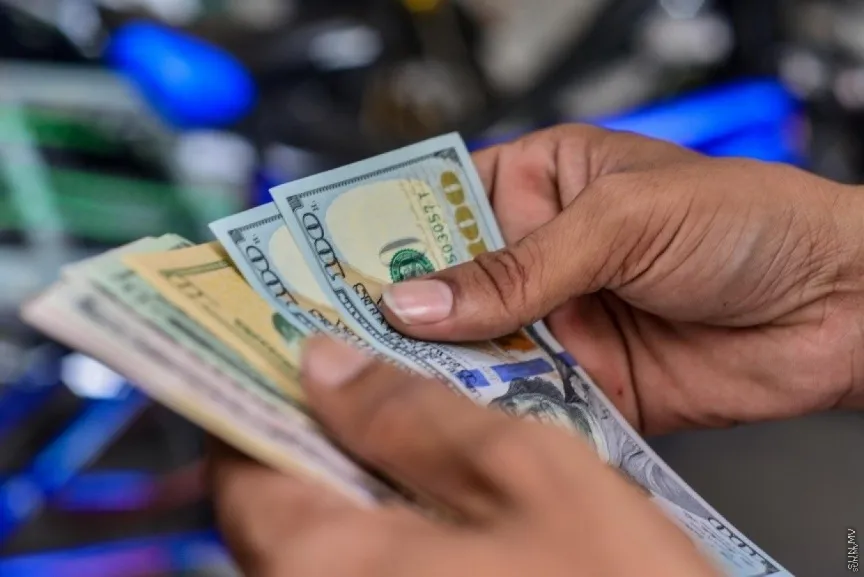
The Maldives Monetary Authority (MMA) has published the names of two resorts that it says have completely failed to exchange foreign currency as required under the Foreign Exchange Act.
The resorts identified by the central bank are Rahaa Resort and South Palm Resort Maldives.
In a statement, the MMA urged all businesses covered by the Foreign Exchange Act to comply with their obligations and said a final opportunity would be provided to eligible entities that have not yet registered with the authority.
According to the MMA, 78 percent of resorts classified under Category A fully complied with dollar exchange requirements, while 20 percent failed to exchange the required amount of foreign currency.
The authority said several resorts had sought concessions citing various reasons, but stressed that businesses remain legally obligated to comply with the regulations. The remaining proportion includes resorts that completely failed to exchange dollars, whose names have now been made public.
Compliance was considerably lower among businesses classified under Category B, which includes guesthouses, tourist hotels, safari vessels and homestays.
The MMA said 48 percent of Category B businesses fully complied with the requirements, while 15 percent exchanged dollars but failed to meet the required amount. A further 37 percent did not exchange any dollars.
As many of the businesses in Category B are medium-sized operators, the MMA said it is providing additional legal leeway and carrying out awareness programmes aimed at improving compliance.
Among Category C businesses, which have annual revenues exceeding USD 15 million, 38 percent fully complied with the foreign exchange requirements, while 33 percent were partially compliant and 29 percent failed to exchange any dollars.
The MMA said businesses in this category had also requested concessions. Amendments to the Foreign Exchange Act have been submitted to address their circumstances, according to the authority.
The central bank also provided details on how foreign currency exchanged under the law is allocated.
According to the MMA, it retains 90 percent of the foreign currency exchanged under the system and redistributes 30 percent to commercial banks operating in the Maldives, with priority given to Maldivian banks.
Banks are required to use the allocated foreign currency for essential public needs, food imports and financing for small and medium enterprises.
The MMA said most of the foreign currency it retains is used for payments related to essential imports, including fuel, gas and medicine, as well as to support the country's foreign currency reserves.
Leave a comment
Comments
No comments yet. Be the first to comment!
Latest News
Bank of Maldives
BML named Banking Partner of Maldives Expo 2026
22 Oct 2026
News
Tax amendment proposes doubling payment required before appealing MIRA assessments
22 Oct 2026
News
BML financing to fishermen reaches MVR 15mn across 119 recipients
21 Oct 2026
News
Pakistan offers G2G supply of essential food and pharmaceuticals to Maldives
21 Oct 2026