

News
MMA Targets Stronger Rufiyaa, Lower Dollar Dependence by 2030
Munawar said foreign currency currently accounts for more than 40 percent of transactions in the Maldivian economy, highlighting the significant level of dollarization.
24 August 2026, 13:01
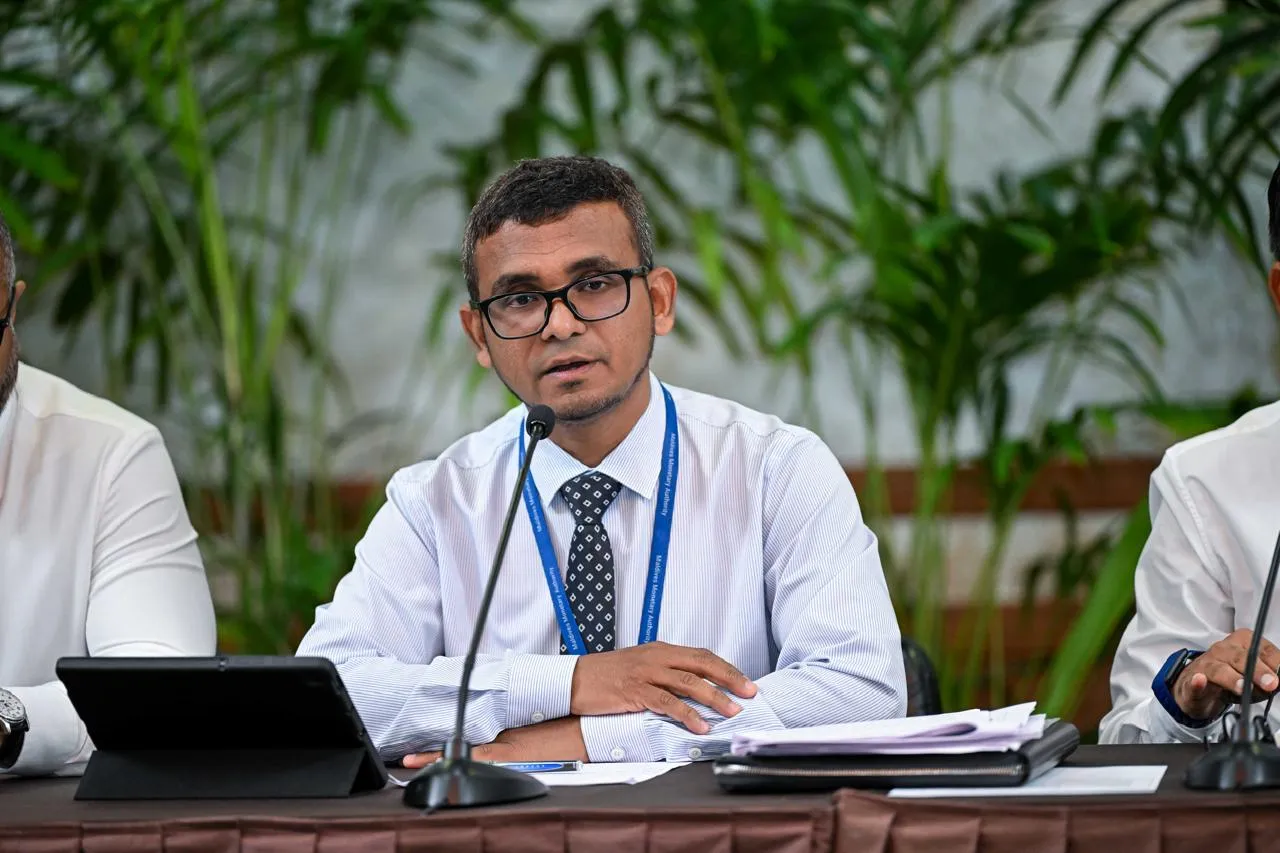
The Maldives Monetary Authority (MMA) has set out a long-term vision to strengthen the Maldivian Rufiyaa and reduce the economy’s reliance on the US dollar by 2030.
MMA Governor Ahmed Munawar said the central bank’s ultimate objective is to increase the use of the Rufiyaa across the economy, with a long-term goal of having goods and services in the Maldives priced in the local currency.
He said the transition would be introduced gradually, particularly given the tourism industry’s long-standing use of the US dollar.
According to Munawar, achieving the target will require a number of policy and operational reforms. These include reviewing taxes and fees currently paid to the state in US dollars, as such payments would also need to shift to Rufiyaa under a broader move towards local-currency pricing.
Existing arrangements that allow certain salaries to be paid in foreign currency may also be reviewed as part of the transition.
Munawar said foreign currency currently accounts for more than 40 percent of transactions in the Maldivian economy, highlighting the significant level of dollarization.
“Monetary policy cannot be effective if there is no demand for the Maldivian Rufiyaa. Since we cannot implement these changes all at once, the MMA’s vision is to realize these transitions by 2030,” he said.
The Governor also stressed that stronger fiscal management and budgetary stability would be key to successfully increasing confidence in the Rufiyaa and reducing dependence on foreign currency.
As part of the longer-term reforms, Munawar said a managed-float exchange-rate system could be the most suitable framework for the Maldives.
Under such a system, market conditions would play a greater role in determining the exchange rate, while the central bank would continue to intervene when necessary to prevent excessive fluctuations.
However, Munawar said the MMA would first need to build stronger foreign currency reserves before transitioning towards a managed-float system.
He said the Maldives should maintain reserves equivalent to at least three to four months of imports to provide sufficient capacity to support the exchange rate.
“Even under a managed float, the MMA must maintain adequate reserves. Whether you look at Singapore or other developed nations, a central bank can only defend its target rate if it has sufficient reserves,” he said.
Munawar estimated that strengthening reserves to the required level could take between two and three years.
The MMA’s 2030 vision is therefore expected to involve a gradual series of reforms aimed at increasing demand for the Rufiyaa, strengthening monetary policy, improving reserve buffers and reducing the Maldives’ long-standing dependence on the US dollar.
Leave a comment
Comments
No comments yet. Be the first to comment!
Latest News
News
Maldivian plans new website and mobile app for February 2027 launch
23 Oct 2026
Bank of Maldives
BML named Banking Partner of Maldives Expo 2026
22 Oct 2026
News
Tax amendment proposes doubling payment required before appealing MIRA assessments
22 Oct 2026
News
BML financing to fishermen reaches MVR 15mn across 119 recipients
21 Oct 2026