

Features
Revolutionizing the Southern Economy: Establishment of Addu Free Zone
Under the government’s strategic vision to diversify the Maldivian economy and reduce its reliance on a single industry, emphasis has been given to transform the greater Addu region to an Economic Hub.
19 May 2026, 12:05
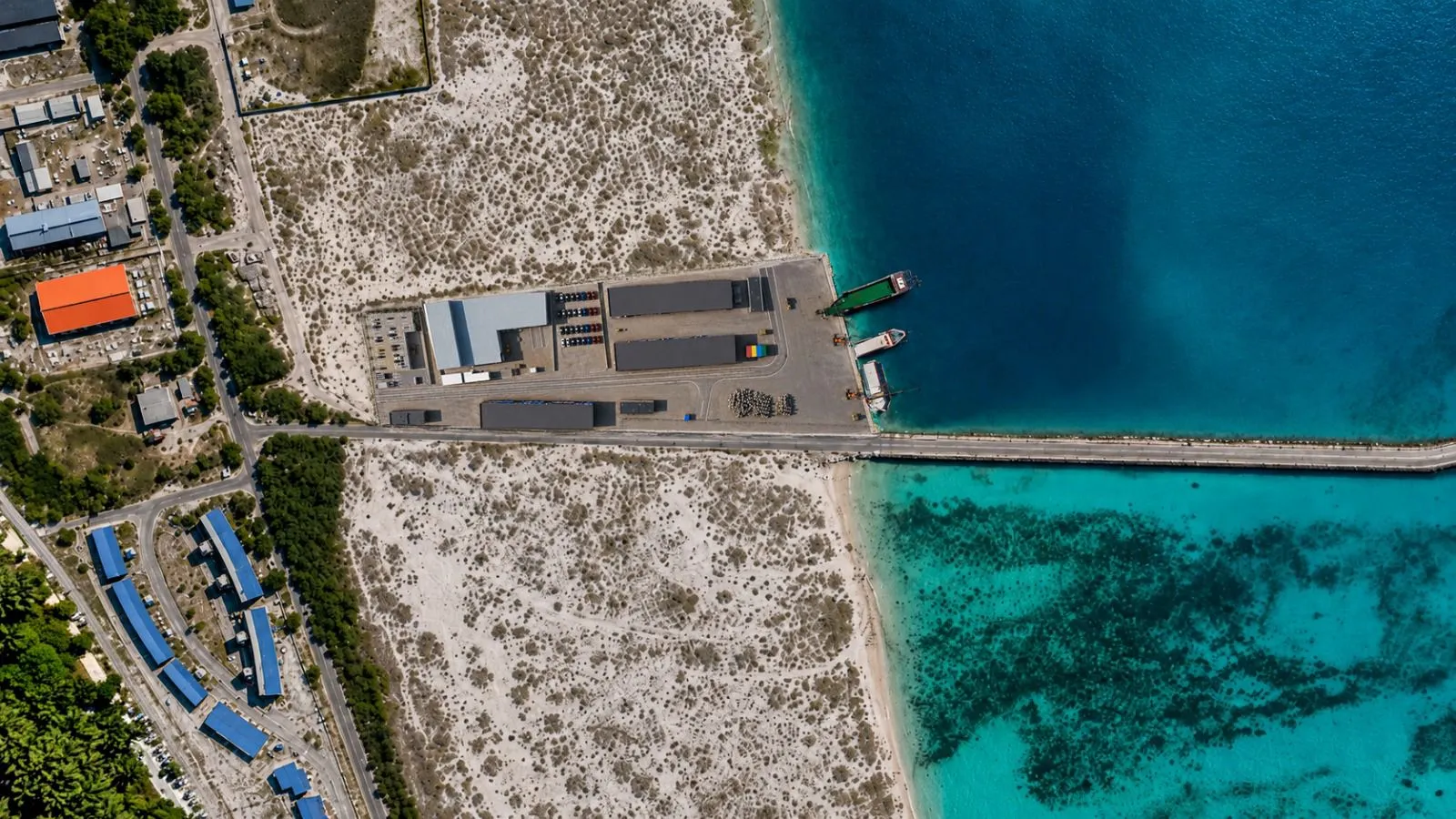
Addu city is the second largest urban area in the Maldives. Over the past decades, numerous development initiatives to boost trade and economic activities have been undertaken. However, due to several reasons, these initiatives have not been able to bring forth a meaningful impact.
Under the government’s strategic vision to diversify the Maldivian economy and reduce its reliance on a single industry, emphasis has been given to transform the greater Addu region to an Economic Hub. During his 2026 Presidential address, President Dr.Mohamed Muizu recognised the vast commercial potential of the south and mentioned the establishment of a Addu Regional Free Zone.
The Hithadhoo Regional Port, located in Addu City, is a vital facility developed to provide international-standard maritime services on a broad scale however, its potential has remained largely underutilized until now. To address this, the decision to establish the Addu Free Zone aims to introduce the internationally recognized ‘Free Zone’ model to the Maldives for the first time.
What is a Free Zone?
Free Zones is a globally successful concept. Even in the South Asia region, countries such as India, Sri Lanka and Bangladesh has adapted the Free Zone concept. However, Maldives is yet to establish a Free Zone in any part of the country.
Free Zones are special economic zones designated within a country where goods can be imported and productive activities conducted without customs duty. Customs duty is applied only when the final products exit from the free zone.
The primary activities within the Free Zone include vehicle refurbishment, repackaging, duty-free storage, manufacturing, bonded storage, and re-export services. With the establishment of the Free Zone, Addu will transform into a logistics hub. Based on the experience gained from this pilot project, a similar Free Zone is planned for Kulhudhuffushi. This is part of the government’s policy to ensure equitable development across the North and South of the Maldives, particularly benefiting industrial workers and re-exporters.
Advancements for Hithadhoo Port and Economic Growth for the South
The establishment of a Free Zone in the south will bring substantial economic progress to the region. The Addu Regional Free Zone will serve as a cornerstone for the infrastructure and economic development of the entire southern Maldives, elevating Hithadhoo Port into an international-standard logistics and commercial center. Furthermore, this system will foster a robust economic industry that is self-sustaining and less dependent on government subsidies. This will create numerous future employment opportunities for the youth of Addu City and the southern atolls.
The project prioritizes Maldivian entrepreneurs and companies, turning Addu City into a global business hub for vehicle trade, packaging, exports, re-exports, and logistics services. Introducing the global Free Zone model will enhance international investor confidence and increase foreign currency inflows. Designating Addu and Kulhudhuffushi as the first centers for this system is a decisive step toward reducing dependence on Male’ and promoting regional development. Consequently, Addu City will evolve from a regional center into a competitive and sustainable "International Economic Hub."
Maldives Ports Limited Deputy Managing Director highlighted the economic potential of the Addu Regional Free Zone and underscored the importance of active business community participation in ensuring the success of the initiative.
“This project is expected to create substantial employment opportunities across the southern region. To successfully achieve this vision, we encourage strong participation and collaboration from the business community to help make the zone a lasting success.”
Minister of Economic Development, Transport and Trade Mohamed Saeed stated that while free zones are still a relatively new concept in the Maldives, they have been widely adopted in industrialized and neighbouring countries as a proven strategy for driving economic growth.
“The Free Zone initiative in Addu City is expected to deliver significant economic and commercial benefits to the region and the country as a whole,” he said.
The Free Zone project at Addu Hithadhoo Regional Port is the foundation for diversifying the Maldivian economy and reaching new heights in regional development. Beyond being a commercial center, it is a revolutionary start for the social and economic progress of the southern population. This project will build a professional environment where local talent and skills can thrive, effectively implementing the policy of balanced development across the nation. Ultimately, it will strengthen the Maldives' economic independence and establish Addu City as a prominent regional hub on the global trade map.
This initiative is a collaborative effort between the Ministry of Economic Development, Maldives Ports Limited (MPL), Maldives Customs Service, and other relevant government agencies. A land area of 1.7 hectares has been designated within the Hithadhoo Port premises for the "Addu Regional Free Zone," with 20,000 square feet already prepared for the initial phase. Authorities are currently formulating regulations and procedures as services are introduced. This Free Zone will operate as an "offshore" area, exempt from standard customs procedures. Goods imported into this zone will not incur import duties during their storage period.
Maldives Ports Limited (MPL) has officially opened the opportunity for interested businesses to submit Expressions of Interest (EOI) for cargo storage and other free zone-related activities within the Addu Regional Free Zone. The designated land plots will be officially allocated to businesses following the proposal evaluation process
Leave a comment
Comments
No comments yet. Be the first to comment!
Latest News
MMA
USD 1,000 medical travel facility limited to six countries; Aasandha allocation unchanged
13 Oct 2026
News
Supreme Court Registrar rejects challenge to Eagle Hills Ras Malé agreement
13 Oct 2026
News
CROSSROADS Maldives reef area receives official OECM conservation status
13 Oct 2026
News
Muththalib Sets Out Safeguards for Ras Malé Project, Affirms Commitment to Palestine
13 Oct 2026