

Fisheries
Maldives Makes History as IOTC 30th Session Opens in Malé
For the first time in the Commission's history, the island nation takes centre stage in shaping the future of Indian Ocean tuna governance
11 May 2026, 07:53
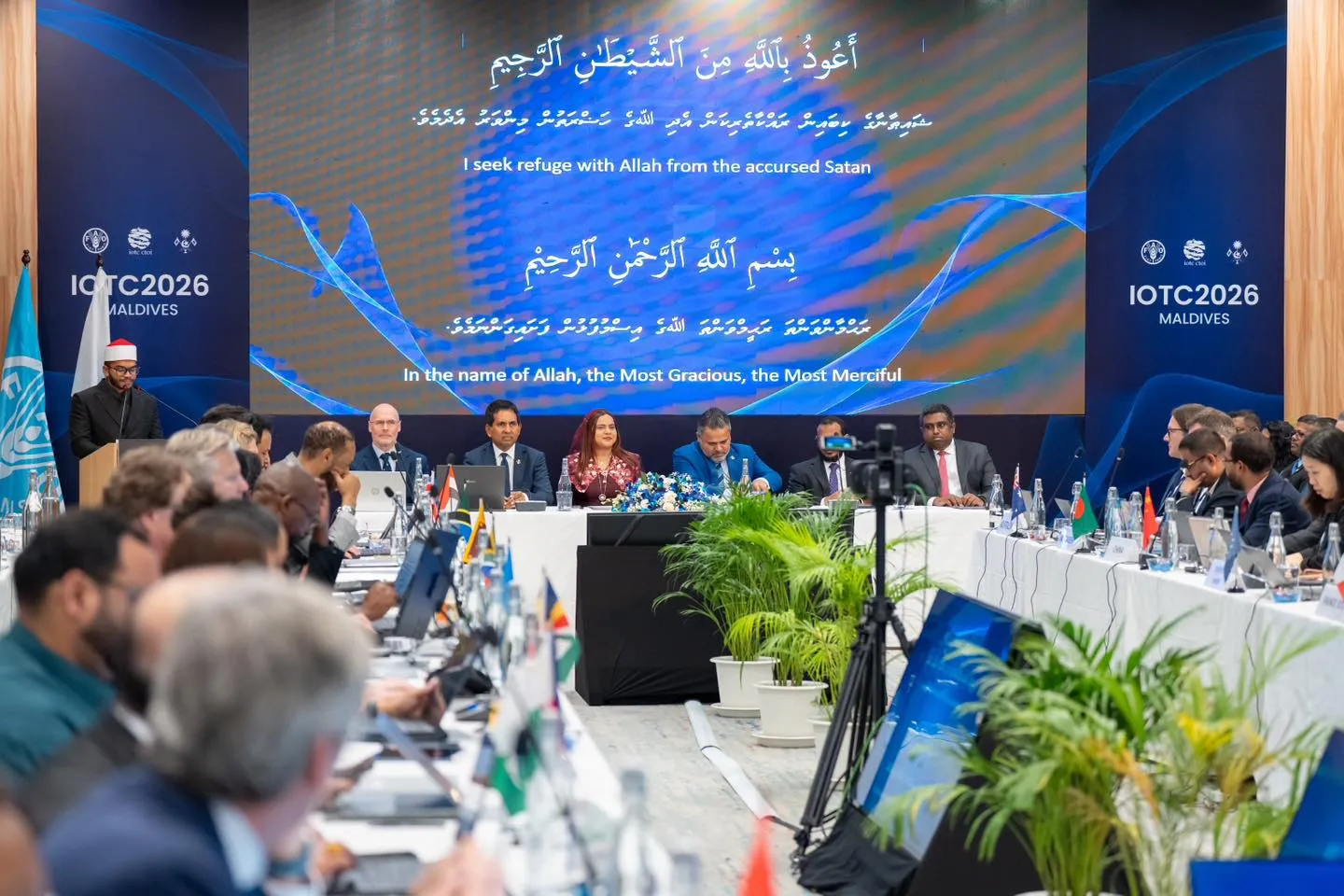
The Maldives today officially opened the 30th Session of the Indian Ocean Tuna Commission (IOTC), a milestone moment as the island nation hosts the Commission for the very first time in its three-decade history. The five-day session runs from 11 to 15 May 2026 in Malé, bringing together member states and international stakeholders to deliberate on some of the most pressing challenges in ocean fisheries governance.
A Nation Built on Tuna
For the Maldives, this is far more than a diplomatic occasion. After tourism, fisheries is the country's most important industry, with roughly a third of the population involved in fishing in some way, a figure that rises to 70 percent on isolated atolls. In a country that is 99 percent ocean, with little land to cultivate and no space for livestock, fisheries is one of the only sources of protein, typically eaten with every meal. Marine Stewardship Council
The Maldivian pole-and-line fishery is one of the largest coastal fisheries in the Indian Ocean. This sustainable fishing method has been practiced for centuries — one hook, one line, one fish at a time. The fishery supports some 30,000 people, or 11 percent of the Maldivian workforce. The Maldives produces approximately 76,000 tonnes of pole-and-line tuna annually, making it one of the world's top three producers alongside Japan and Indonesia. RISEInternational Seafood Sustainability Foundation
Opening Ceremony: A Call for Equity and Science-Based Action
Officiating the opening ceremony, Minister of Fisheries, Agriculture and Ocean Resources Ahmed Shiyam drew on the Maldives' centuries-old bond with the sea, reaffirming the nation's unwavering commitment to sustainable fisheries management. He underscored the importance of international cooperation, science-based decision-making, and ensuring that the voices of coastal communities and Small Island Developing States are not lost in the corridors of global ocean governance.
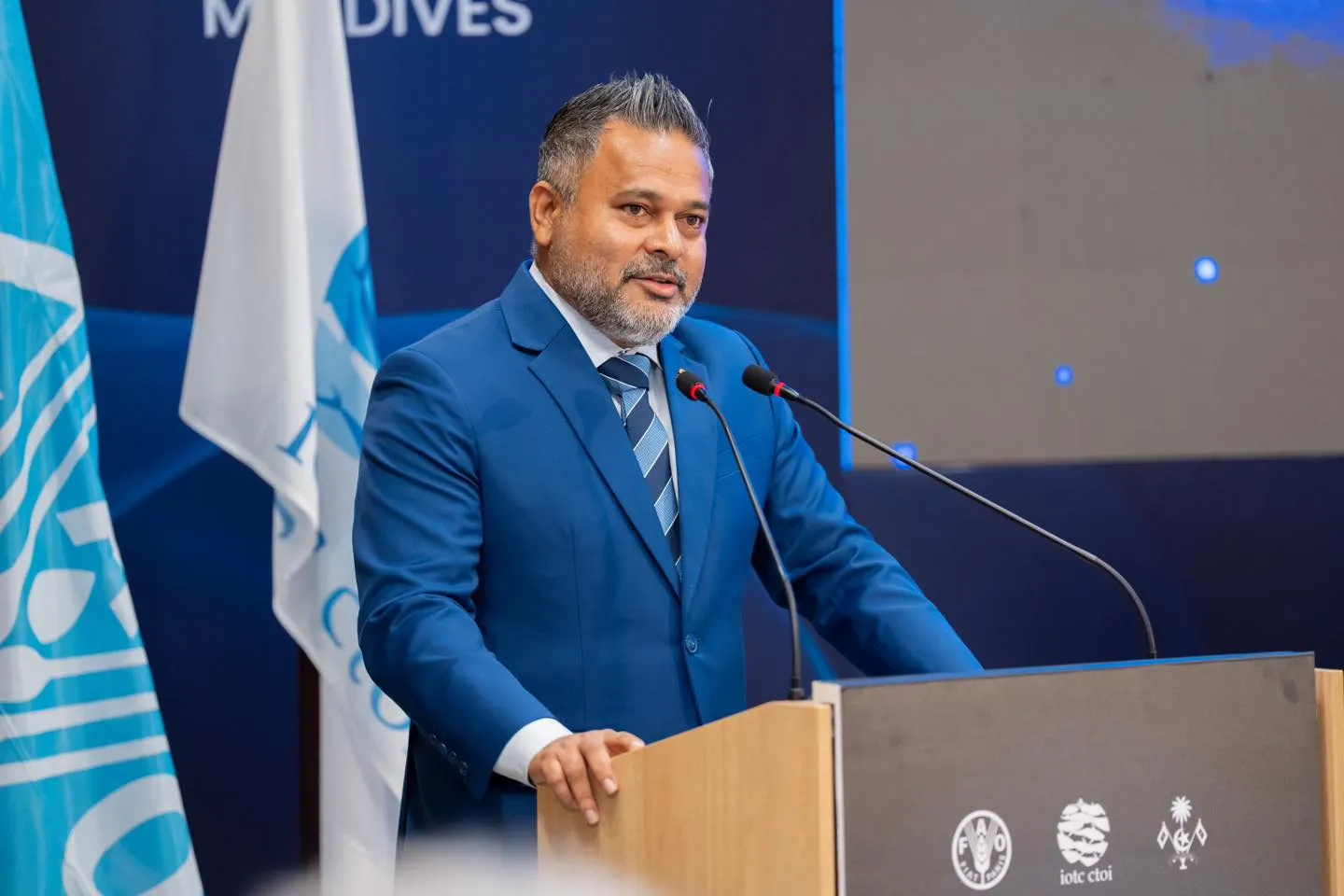
"Under the leadership of His Excellency President Dr Mohamed Muizzu, the Government of Maldives has placed strong emphasis on strengthening the fisheries sector, modernising our industry, supporting fishing communities, and reinforcing our role as a responsible steward of the Indian Ocean." — Ahmed Shiyam, Minister of Fisheries, Agriculture and Ocean Resources
The opening ceremony was also addressed by Minister of Foreign Affairs Iruthisham Abdullah, who underlined that the Maldives' foreign policy has long centred on three pillars — tourism, trade, and fishing — and stressed the need for coherence across global ocean commitments, including the landmark BBNJ Agreement. Also in attendance were Minister of Economic Development, Transport and Trade Mohamed Saeed, and Minister of Climate Change, Environment and Energy Ali Shareef.
A Historic Hosting, a Strategic Statement
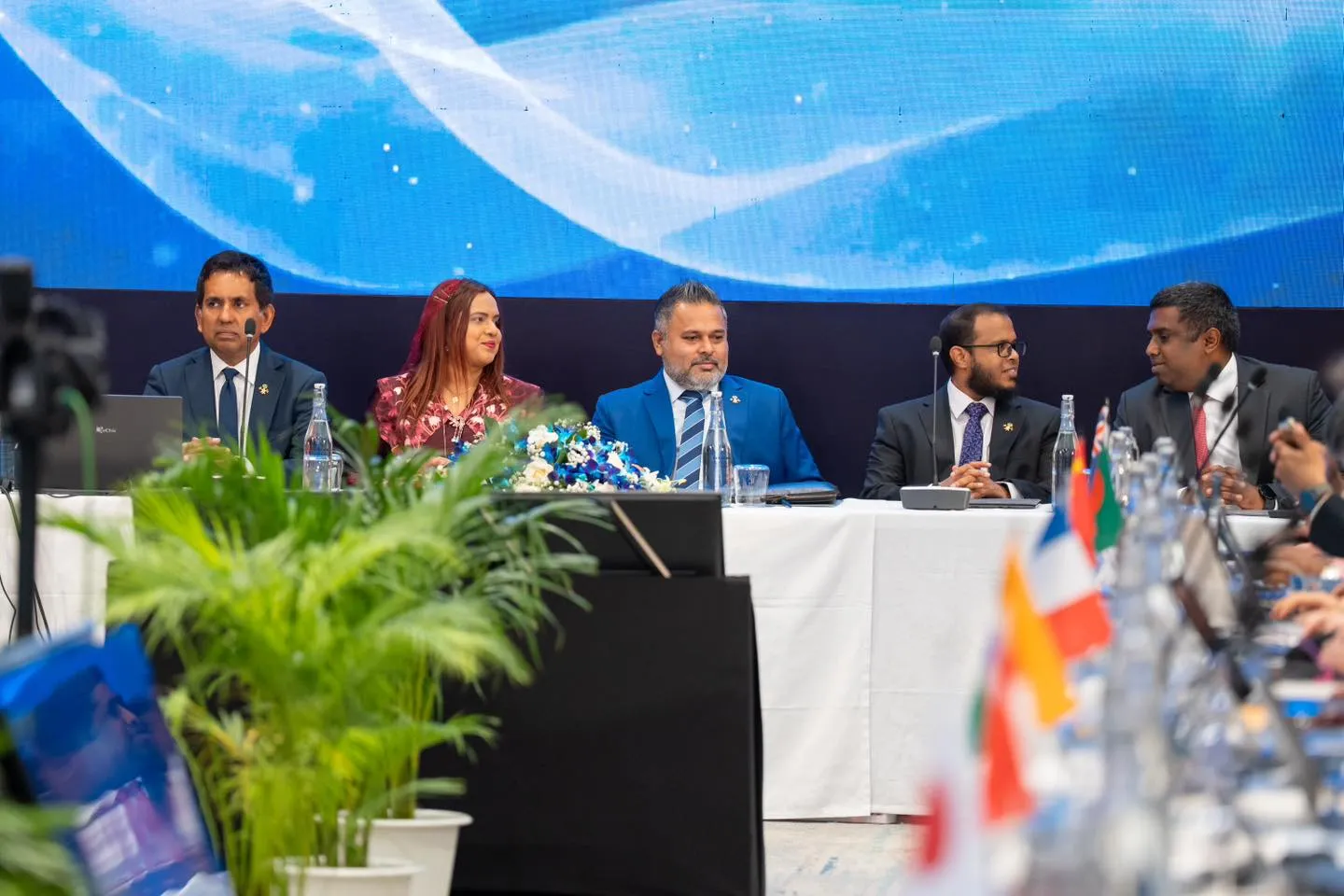
Hosting IOTC S30 marks a historic milestone for the Maldives. The IOTC serves as the regional authority responsible for managing shared tuna stocks across the Indian Ocean. The decision to bid for and secure this hosting is a direct expression of President Dr Mohamed Muizzu's administration's ambition to elevate the Maldives' standing in regional and international ocean governance — not merely as a participant, but as a convener. Fisheries
The Maldives has long been a vocal advocate at the IOTC. At last year's 29th Session, held in La Réunion in April 2025 and chaired by the Maldives' own Adam Ziyad, the Maldivian delegation submitted a landmark proposal on aligning IOTC's work with the BBNJ Agreement — a treaty governing the conservation of marine biodiversity in international waters. The proposal called on the Commission to take positions on relevant BBNJ proposals on Area-Based Management Tools, and tasked the Executive Secretary to establish formal communication channels with the BBNJ Secretariat. OceanequityresearchOceanequityresearch
What's at Stake in Malé
Going into IOTC S30, yellowfin and skipjack tuna stocks are in a healthy state, while bigeye tuna is showing signs of recovery, with all stocks under catch limits and management procedures. However, contentious debates are expected on key issues including the yellowfin tuna allocation scheme, vessel monitoring systems, compliance enforcement, and shark conservation measures. The Fishing Daily
On the conservation of sharks, the 2025 session had made a significant breakthrough, for the first time in IOTC's history, a comprehensive set of measures was adopted for wide-ranging shark species in the Indian Ocean, many of which have experienced substantial stock declines over the past 50 years and are globally threatened with extinction. Delegates in Malé will now be expected to follow through on those commitments with concrete management measures for 2026. Iotc
The stakes are also high at home. The Maldives fisheries sector has been experiencing rapid changes, including a declining number of active fishing vessels and a notable drop in export volumes and revenue since 2023, underscoring why science-based international management of shared stocks matters deeply to fishing communities across the archipelago. Maldivesfishermensassociation
A Sustainable Legacy
The Maldives skipjack and yellowfin tuna fisheries, both certified as sustainable by the Marine Stewardship Council (MSC) since November 2012, are confined within the country's 200-mile Exclusive Economic Zone, with only licensed Maldivian vessels permitted to fish. Despite strong sustainability credentials, the Maldives pole-and-line fishery continues to compete against highly industrialised fleets for market share and resources, with the hardest hit being local fishing communities. MscRISE
It is precisely this reality — the vulnerability of small nations and artisanal fishers in a globalized ocean economy — that the Maldives hopes to amplify from its seat as host of IOTC S30.
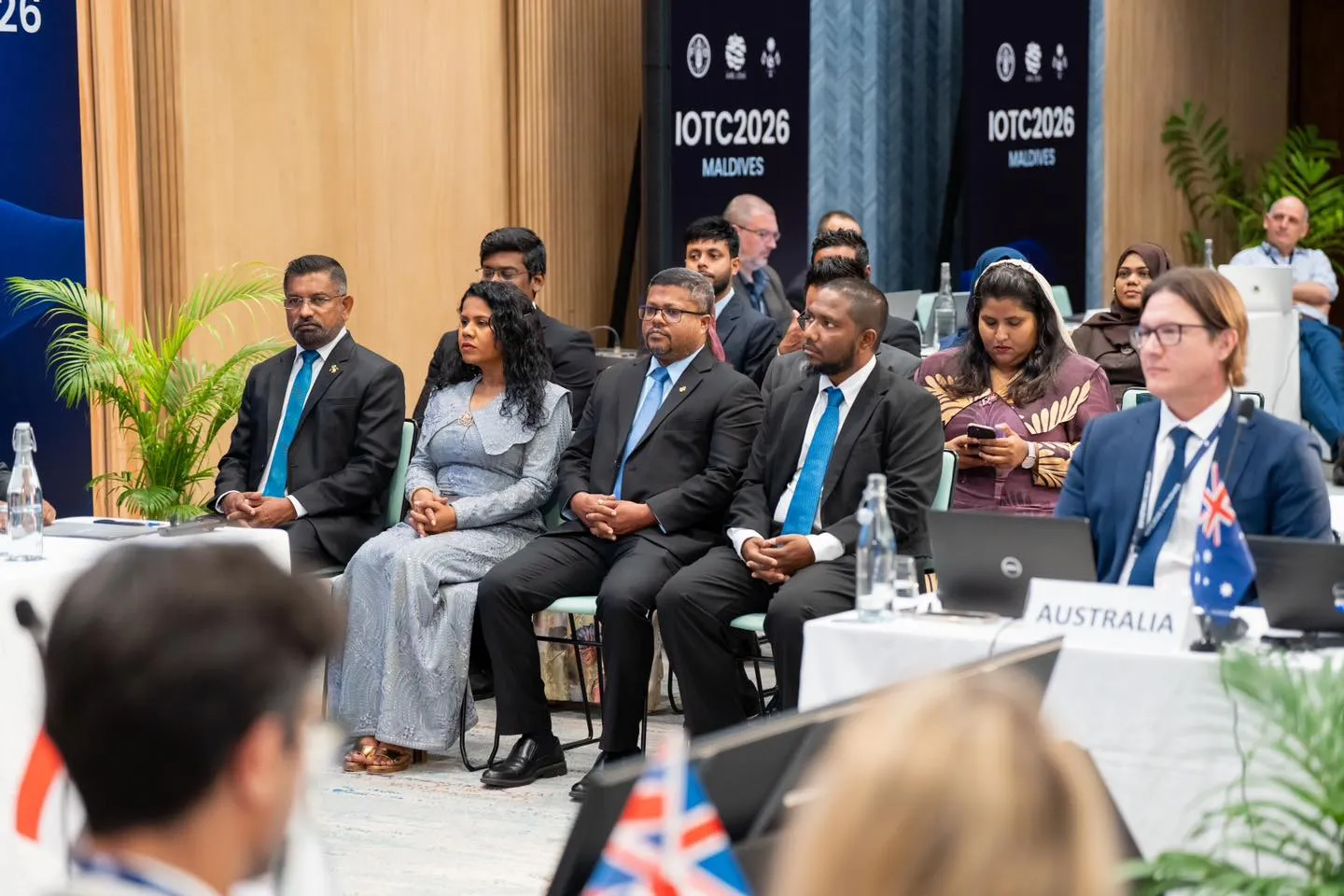
The IOTC is an intergovernmental organization responsible for managing tuna and tuna-like species in the Indian Ocean, working to promote cooperation among its Contracting Parties to ensure the conservation and appropriate utilization of fish stocks and encouraging sustainable development of fisheries. Its 29 members include Australia, Bangladesh, China, Comoros, the European Union, France, India, Indonesia, Iran, Japan, Kenya, South Korea, Madagascar, Malaysia, Mauritius, Mozambique, Oman, Pakistan, the Philippines, the Seychelles, Somalia, South Africa, Sri Lanka, Sudan, Tanzania, Thailand, the United Kingdom, and Yemen—alongside the Maldives itself. IotcUnited Nations
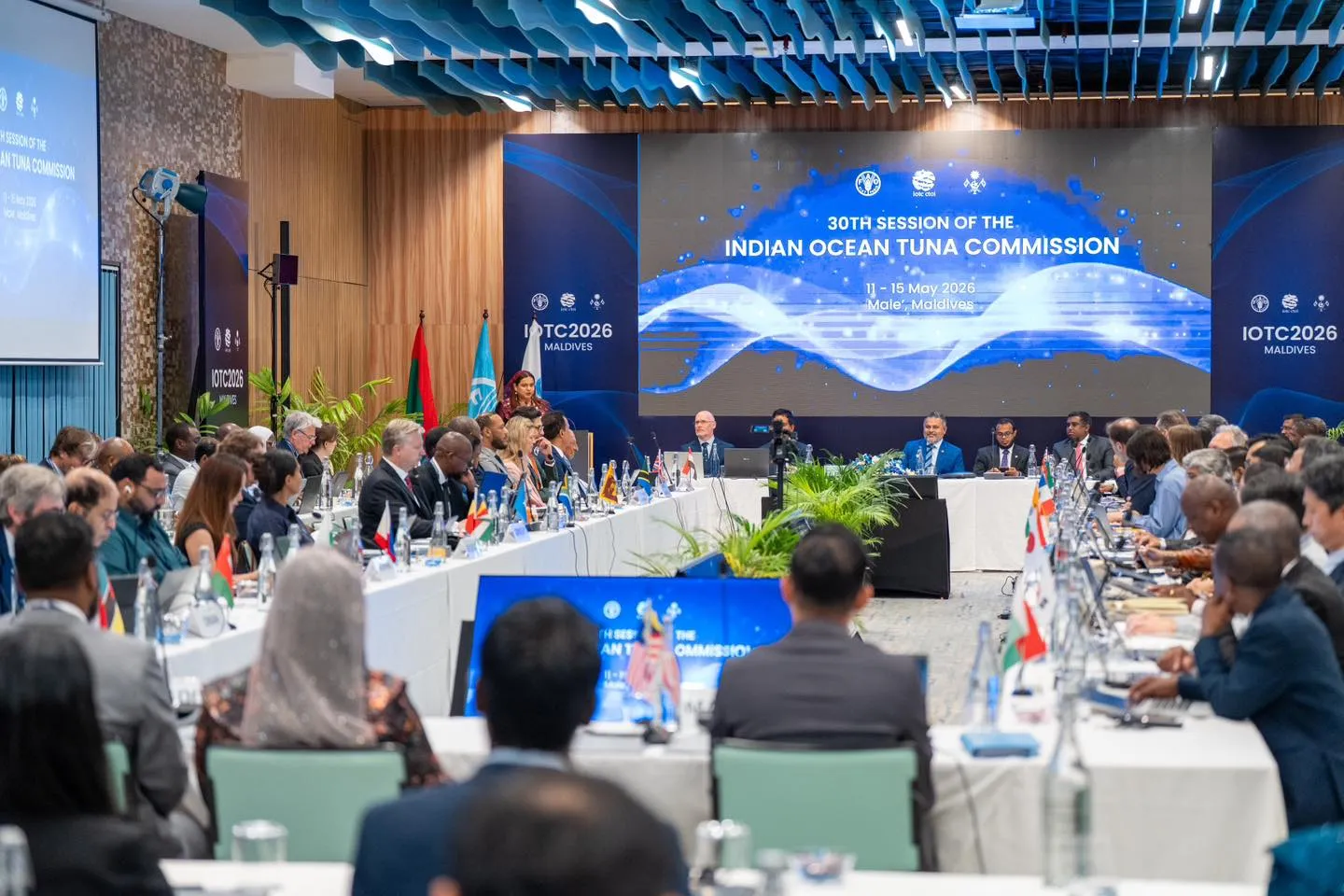
As delegates from across this vast membership gather in Malé this week, the Maldives is not simply playing host — it is making a statement about who belongs at the table when the ocean's future is being decided.
Leave a comment
Comments
No comments yet. Be the first to comment!
Latest News
Bank of Maldives
BML opens applications for Startup Grant 2026 with two MVR 500,000 grants
20 Oct 2026
News
Government moves to repeal TGST on foreign tour operators, reversing October tax change
20 Oct 2026
News
Maldives Government to Retain Full Control of Rasmalé Project, Says President
20 Oct 2026
Ooredoo Maldives
Ooredoo opens registration for Fun Run 2026
20 Oct 2026